What a Conversion Optimization Consultant Does and Why You Need One
A conversion optimization consultant is a specialist who helps businesses turn more website visitors into customers, leads, or subscribers without spending more on traffic. They study why visitors hesitate, then fix it. In 2026, this work goes beyond button colors or one-off landing page tests. Top consultants combine analytics, user research, experimentation, AI-assisted insights, and UX improvements to find friction and remove it.
What a Conversion Optimization Consultant Does in 2026:
- Analyzes user behavior using analytics, heatmaps, session recordings, form analytics, customer surveys, and funnel data to find conversion barriers
- Develops hypotheses based on research, user intent, friction patterns, and business value rather than opinions or generic “best practices”
- Runs A/B and multivariate tests to validate which changes improve revenue, qualified leads, average order value, or other meaningful outcomes
- Uses AI carefully to speed up research synthesis, test ideation, personalization concepts, and copy variations while still validating changes with real user data
- Optimizes the customer journey from first visit to landing page, product page, checkout, demo request, or lead form submission
- Prioritizes high-impact fixes such as checkout friction, unclear value propositions, mobile usability issues, slow pages, trust gaps, and weak calls-to-action
- Measures ROI with transparent reporting that connects experiments to revenue, lead quality, pipeline value, and customer lifetime value
Unlike general marketing consultants who focus mainly on driving traffic, CRO specialists concentrate on maximizing the value of visitors you already have. They bring specialized expertise in user psychology, testing methodology, conversion-focused design, and measurement that most in-house teams do not have time to develop deeply.
The payoff can be substantial, but the most credible consultants will avoid guaranteeing a specific lift before research and testing begin. In July 2026, a realistic recommendation is to benchmark your own funnel first, then prioritize opportunities by business impact, confidence, and effort. For ecommerce teams, checkout remains a major opportunity: Baymard’s current cart abandonment research reports an average documented online shopping cart abandonment rate of about 70%, which means even modest friction reduction can have a meaningful revenue impact.
Why does your business need conversion rate optimization? As W. Edwards Deming said, “Without data you’re just another person with an opinion.” Most websites have conversion leaks hiding in plain sight: confusing messaging, unexpected costs, form friction, weak trust signals, poor mobile UX, slow load times, or a mismatch between ad promise and landing page experience. A skilled consultant brings the objectivity, tools, and proven process to uncover that hidden value.
I’m Jeffery Loquist, Senior Director of Optimization at SiteTuners, and I’ve spent over 18 years as a conversion optimization consultant helping businesses turn their traffic into customers. I’ve managed complete optimization programs for e-commerce brands and B2B companies, overseeing everything from A/B testing strategy to paid media optimization that directly impacts the bottom line.
The Core of Conversion Rate Optimization (CRO)
Let’s get to the heart of what Conversion Rate Optimization really means for your business.
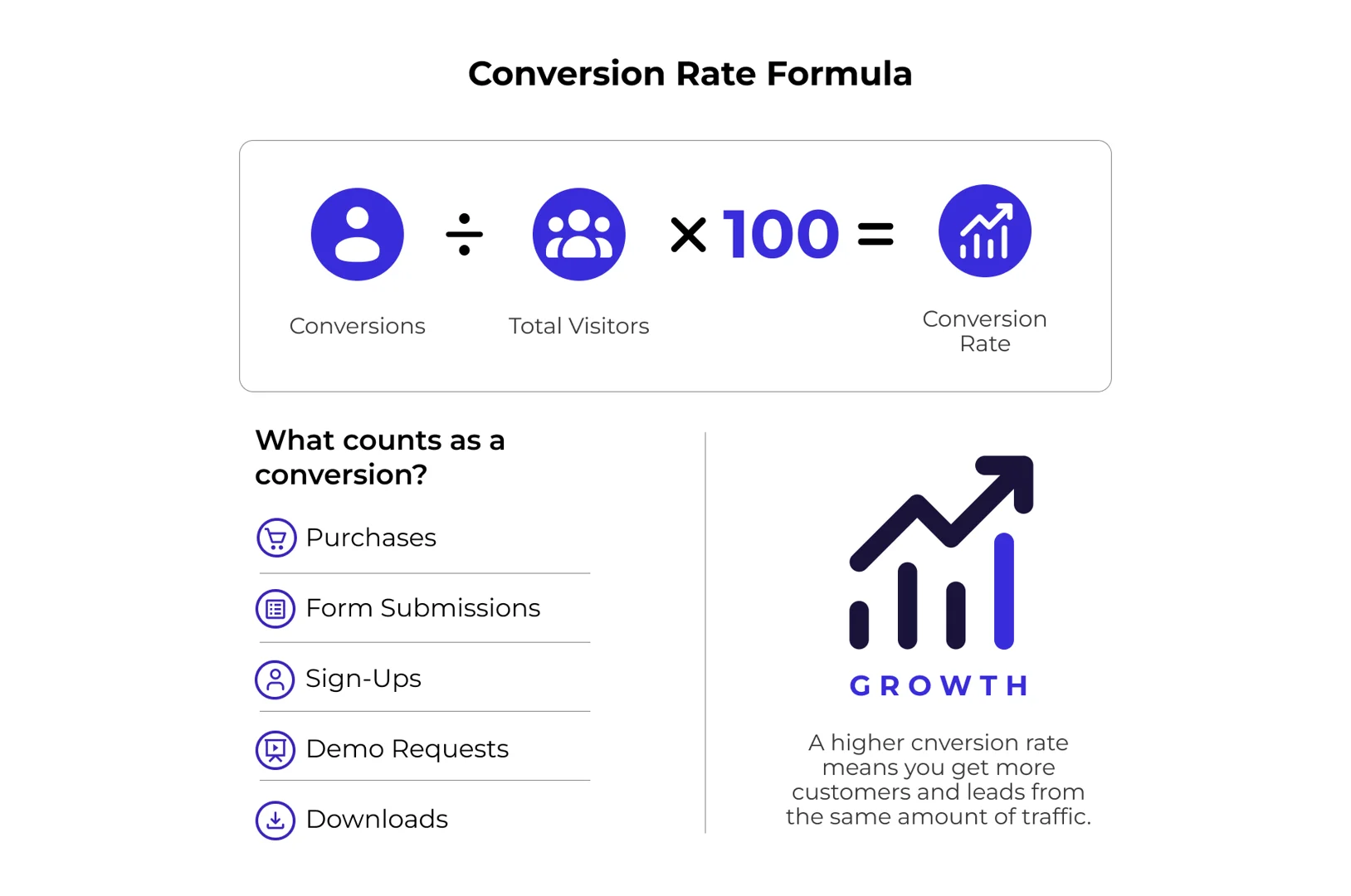
At its simplest, CRO is about making every visitor count. Think of it this way: you’ve already done the hard work of getting people to your website—whether through ads, search engines, or social media. CRO ensures those visitors don’t just look around and leave. Instead, they take action: they buy, they sign up, they request a demo, they become customers.
Conversion Rate Optimization is about increasing those desired actions without needing more traffic. It’s about working smarter, not harder. A conversion optimization consultant digs into why visitors aren’t converting and fixes those problems systematically.
But here’s what makes CRO special: it’s not just about boosting numbers. Improving the user experience is at the core of everything we do. When we remove friction points—confusing navigation, slow-loading pages, unclear calls-to-action—visitors have a better time on your site. They find what they need faster. They trust you more. And yes, they convert more often.
This approach also means maximizing your existing traffic. You’re already paying for those clicks and working hard for those organic visitors. CRO squeezes every drop of value from that investment. Why spend more on advertising when you could double your results from the traffic you already have?
Perhaps most valuable of all, CRO gives you deeper customer insights. Through testing and analysis, you learn what your visitors actually want, what confuses them, and what motivates them to take action. These insights don’t just improve your website—they inform your entire business strategy.
How CRO Integrates with Other Digital Marketing Strategies
CRO doesn’t work in isolation. It’s the secret ingredient that makes all your other marketing efforts more effective.
_compressed.webp?alt=media&token=d86957a5-2d2e-496c-b536-f1900512ed10 "Diagram showing CRO's relationship with SEO and PPC, with CRO in the center - conversion optimization consultant")
Think about SEO synergy. Your SEO team works hard to rank your pages and drive organic traffic. But what happens when those visitors arrive? If they bounce because your page is confusing or slow, all that SEO effort goes to waste. CRO ensures those hard-won visitors have a smooth, engaging experience that leads to conversions. Better yet, the improved user experience signals to search engines that your content is valuable, potentially boosting your rankings even further.
Then there’s PPC landing page optimization. Every click on a paid ad costs you money. If your landing page doesn’t convert, you’re paying for clicks that never generate a return. A conversion optimization consultant optimizes these pages ruthlessly—testing headlines, simplifying forms, clarifying value propositions, and removing distractions. The result? More conversions from the same ad spend, which means a dramatically better return on your advertising investment.
The beauty is that CRO amplifies everything else you’re doing. Better SEO traffic converts better. Paid ads become more profitable. Email campaigns drive more sales. It’s the multiplier effect that transforms good marketing into great results.
The Difference Between CRO and General Marketing
Here’s where things get interesting. General marketing and CRO might seem similar, but they’re actually quite different animals.
A general marketing consultant is your all-rounder. They help with brand strategy, content marketing, social media, email campaigns—basically, getting your name out there and driving traffic. They’re excellent at the big picture and bringing people to your digital doorstep.
A conversion optimization consultant is a specialist who focuses on what happens after visitors arrive. We’re the detail-obsessed analysts who live in the data. While a general marketer might celebrate a traffic spike, we’re asking: “Great, but how many of those visitors actually converted?”
This data-driven approach sets CRO apart. We don’t make decisions based on opinions or best practices. We test everything. We analyze user behavior patterns through heatmaps, session recordings, and analytics. We understand user psychology and what actually motivates people to take action.
Most importantly, we focus on bottom-line metrics that directly impact revenue. Not vanity metrics like page views or time on site (though those can be useful indicators). We care about conversion rates, revenue per visitor, average order value, and ROI. These are the numbers that show up on your profit and loss statement.
| Comparison point | General Marketing Consultant | CRO Consultant |
|---|---|---|
| Main focus | Getting people to your site | Getting visitors to take action once they arrive |
| Success metric | Traffic, reach, impressions | Conversion rate, revenue per visitor |
| Approach | Brand strategy, content, ads | Testing, data analysis, user psychology |
| Typical deliverable | Campaigns, content calendars | A/B test results, funnel fixes |
Why CRO is Crucial for Business Growth
Let’s talk about why CRO should be non-negotiable for your business.
First, there’s boosting sales from current traffic. Imagine increasing your revenue by 30% without spending another dollar on advertising. That’s not fantasy—it’s what happens when you optimize your conversion funnel. Most businesses are sitting on untapped potential, leaving money on the table simply because their website isn’t optimized.
Then there’s enhancing user satisfaction. When you remove friction and make things easier for visitors, they notice. They appreciate it. A smooth, intuitive experience builds trust and makes people feel good about doing business with you. This isn’t just about conversions today—it’s about building a reputation that brings people back.
Speaking of which, CRO plays a huge role in increasing customer lifetime value. First-time buyers who have a great experience become repeat customers. They tell their friends. They leave positive reviews. The compound effect of these improved experiences can transform your business over time.
Finally, CRO improves ROI on all your marketing spend. Every channel you invest in—whether it’s Google Ads, Facebook campaigns, or content marketing—becomes more profitable when your conversion rate improves. It’s like turning up the volume on everything that’s already working.
The bottom line? CRO isn’t a luxury or an afterthought. It’s a fundamental growth strategy that makes every other investment you make more effective. And in today’s competitive landscape, it’s often the difference between businesses that thrive and those that struggle.
Why Your Business Needs a Professional Conversion Optimization Consultant
You’ve put in the hard work to build your website and attract visitors, but are you truly getting the most out of it? Many businesses find themselves in this exact position. That’s where a professional conversion optimization consultant steps in. CRO is a detailed and multi-layered process, and to unlock its full potential, you need experts guiding the way. Choosing the right consultant can transform average performance into measurable growth.
Benefits of Hiring an Expert
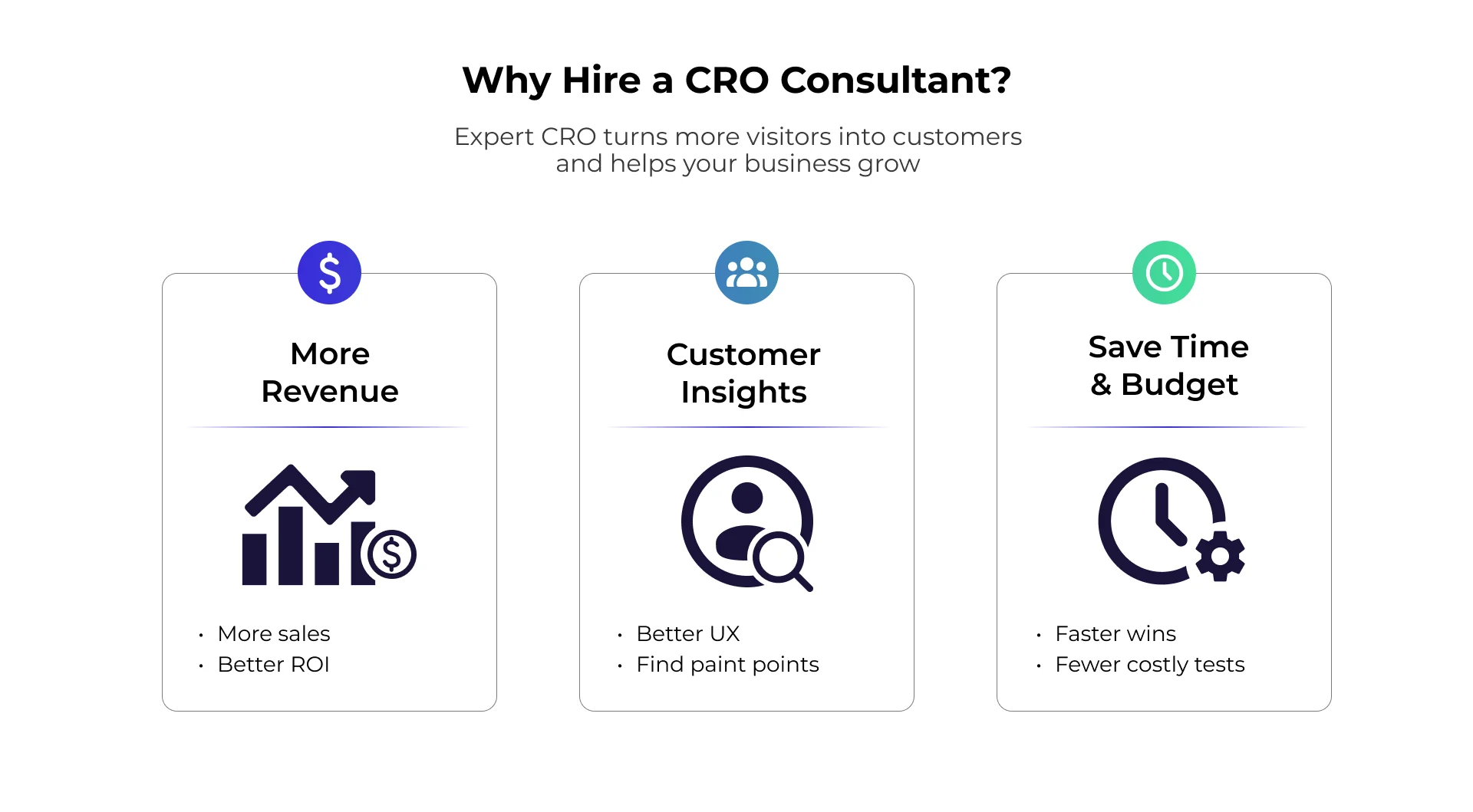
Working with a conversion optimization consultant can bring significant advantages to your business. First and foremost, it leads to increased revenue or better-qualified leads. Consultants specialize in turning more of your website visitors into buyers, demo requests, subscribers, or sales-ready prospects, directly improving return on your existing marketing investment.
Beyond just sales, a CRO consultant offers a deeper customer understanding. By carefully analyzing user behavior and data, they uncover what truly makes your customers act—or what makes them leave. In 2026, this often includes combining quantitative analytics with qualitative research, such as customer interviews, surveys, session recordings, and support-team insights, so recommendations are grounded in real behavior rather than assumptions.
Finally, bringing in an expert can actually save you time and money. A skilled consultant comes equipped with specialized knowledge and access to powerful tools. They can pinpoint the most cost-effective strategies for success, helping your online business avoid expensive trial-and-error tactics. This focused approach means you spend less time guessing and more time growing, freeing up your team to focus on other crucial areas.
The Value of Objectivity
It’s natural to be passionate about your own business, but sometimes, being too close can make it hard to spot your website’s flaws. It’s easy to become so familiar with your own website that usability issues become difficult to spot. An external conversion optimization consultant provides a fresh, unbiased perspective. They’re free from internal biases or assumptions, which is invaluable for identifying the friction points that prevent visitors from converting. Their objective view helps you focus optimization efforts on what truly matters.
Access to Advanced Tools and Methodologies
The digital world is always changing, and so are the tools and methods for CRO. A top-tier conversion optimization consultant stays on top of current market trends, testing methods, privacy changes, and optimization software. They bring sophisticated methods like A/B testing, multivariate testing, heatmaps, user tracking, form analytics, customer surveys, and AI-assisted test ideation to the table.
AI can accelerate research synthesis. But it does not replace disciplined experimentation. The strongest CRO programs still validate changes through clean measurement, statistical rigor, and a clear connection to business outcomes.
Key Skills of a Top-Tier CRO Expert
What separates a truly exceptional conversion optimization consultant from someone who just tinkers with button colors? It comes down to a rare combination of skills that blend hard analytics with soft psychology, technical know-how with creative thinking.
At the foundation sits data analysis. A top consultant lives and breathes website metrics and user behavior patterns. They don’t just glance at Google Analytics once a week—they dive deep, pulling insights from multiple platforms, spotting patterns others miss, and turning raw numbers into actionable strategies. This analytical rigor drives every optimization effort and ensures decisions are grounded in evidence, not hunches.
But numbers alone don’t tell the whole story. That’s why user psychology is equally critical. The best consultants understand what makes people tick. They can anticipate customer needs, identify emotional triggers, and spot pain points that create friction in the buying journey. This empathy for the user experience transforms data into human-centered solutions that actually resonate with real people.
Of course, understanding users is one thing—proving what works is another. That’s where A/B testing and experimentation expertise becomes invaluable. A skilled consultant designs rigorous tests that compare different versions of pages, headlines, forms, and call-to-action buttons. They know how to structure experiments properly, interpret results accurately, and avoid the common pitfalls that lead to false conclusions.
In 2026, a top consultant also understands how to use AI without letting it create false confidence. AI can accelerate research synthesis, identify patterns in qualitative feedback, suggest test concepts, and generate copy variants. However, simulated preferences and AI-generated recommendations should be treated as inputs for prioritization, not proof. The winning version still needs to be validated with real visitors, clean tracking, and meaningful business metrics.
The visual and interactive experience matters enormously too. UX/UI design principles guide how consultants make websites more intuitive, attractive, and engaging. They understand how layout, navigation, visual hierarchy, mobile interaction, form design, and page speed affect whether someone completes a purchase or bounces away in frustration. A smooth, well-designed experience reduces abandonment rates and helps customers get what they need quickly.
Finally, there’s the often-overlooked art of conversion copywriting. Words are powerful persuaders. A top-tier consultant knows how to craft compelling headlines, persuasive product descriptions, and motivating calls-to-action that speak directly to what matters most to your audience. This isn’t flowery creative writing—it’s data-driven messaging that moves people to act.
To sharpen your own understanding, we always encourage learning from industry-leading CRO experts and their insights. The field evolves constantly, and staying connected to the broader community keeps skills sharp.
Real-World Impact: What Success Looks Like
Theory is great, but what does a skilled conversion optimization consultant actually deliver in the real world? The impact can be genuinely transformative for your bottom line. We’ve seen it across countless industries and business models, from scrappy startups to established enterprises.
While client confidentiality prevents us from sharing specific names, we can tell you about the types of wins we’ve helped businesses achieve—and the numbers speak for themselves.
Increased sales is the most obvious benefit, and it’s often dramatic. We’ve worked with e-commerce businesses that experienced meaningful conversion lifts, directly translating to significant jumps in online revenue. The key is not chasing a universal “good” conversion rate, but finding the gap between your current funnel performance and what your audience, offer, and traffic quality should be able to achieve.
Higher average order value (AOV) is another sweet spot. By refining product pages, optimizing upsell flows, improving merchandising, and smoothing out the customer journey, we’ve helped businesses not only close more sales but increase how much each customer spends. When the experience flows naturally, customers move confidently through each step, often adding more to their cart along the way.
Then there’s the dreaded reduced cart abandonment. Few things are more frustrating than watching potential customers load up their cart only to vanish at checkout. Through rigorous testing of design elements, checkout processes, payment options, cost transparency, and trust signals, we’ve helped clients cut abandonment and recover revenue that was already close to converting.
For B2B companies and businesses focused on lead generation, we’ve delivered improved lead quality. It’s not just about capturing more email addresses—it’s about attracting the right prospects. By optimizing forms, calls-to-action, demo flows, qualification questions, and proof points, we’ve helped sales teams spend less time chasing dead ends and more time closing deals that actually matter.
The effectiveness of a conversion consultant shows up clearly in split test data and analytics. You get a transparent view of how your online store or lead funnel is performing and exactly how much additional revenue or pipeline the CRO initiatives are generating. Our clients typically see positive ROI within the first 12 weeks, with significant improvements becoming evident within 3 to 6 months. That’s not a guarantee—it’s a pattern we’ve observed across over 2,100 satisfied clients since 2002.
Frequently Asked Questions
What does a conversion optimization consultant actually do day to day?
They analyze visitor behavior, run A/B tests, and fix friction points on your site — things like confusing forms, unclear pricing, or slow pages — to turn more visitors into customers.
How is CRO different from SEO or PPC?
SEO and PPC bring visitors to your site. CRO makes sure those visitors actually convert once they’re there. The two work best together.
How long does it take to see results?
Timelines vary by traffic volume, analytics quality, test complexity, and the size of the opportunities in your funnel. Many businesses can identify priority fixes quickly, but statistically reliable test results often take several weeks. At SiteTuners, clients typically see positive ROI within the first 12 weeks, with larger program improvements becoming clearer over 3 to 6 months.
Do I need a CRO consultant if I already have an in-house marketing team?
Most in-house teams are stretched across many priorities. A CRO specialist brings dedicated focus, testing tools, and methodology that’s hard to build in-house without hiring a full team.
Vetting and Choosing the Right CRO Partner
Choosing a conversion optimization consultant is a pivotal step for your business. It’s not just about finding someone who understands CRO; it’s about finding the perfect partner who truly aligns with your vision and goals. Think of it like finding a co-pilot for your growth journey—you want someone you can trust, who brings expertise, and whose style complements your own.
Before you even start looking, take a moment to define your goals. What specific improvements are you hoping to see? More sales, better lead quality, reduced cart abandonment, higher average order value, lower customer acquisition cost, or stronger demo-to-opportunity conversion? Having a clear picture of your objectives will help you find a consultant who specializes in those areas and can deliver the results you desire.
Here’s a helpful guide to some key questions and what their answers might reveal:
| Question to Ask a Potential Consultant | What a Good Answer Looks Like | What a Bad Answer Looks Like |
|---|---|---|
| “What’s your approach to understanding our business and our customers?” | “We start with a deep dive into your existing data, conduct user research, review your analytics setup, and hold discovery calls to understand your customer journey.” | “We apply our standard 5-step CRO process to all clients. It works for everyone.” |
| “How are you using AI in your CRO process in 2026?” | “We use AI to speed up research synthesis, ideation, and copy variation, but every recommendation is prioritized by business impact and validated through real user data or testing.” | “Our AI knows what will convert, so we do not need user research or A/B testing.” |
| “Can you share examples of past successes, especially in our industry?” | “Absolutely. Here are detailed case studies or anonymized examples showing the challenge, methodology, test design, and measurable results for clients similar to yours.” | “We can’t share any details, but we’ve helped many businesses.” |
| “How do you prioritize tests, and what’s your testing philosophy?” | “We use a data-driven prioritization framework such as ICE or PIE, then focus on changes that connect to revenue, qualified leads, or customer value.” | “We go with our gut feeling and test whatever looks best.” |
| “What does your communication and reporting process look like?” | “You’ll receive regular updates, clear experiment readouts, learnings from wins and losses, and reporting that connects activity to business KPIs.” | “We’ll be in touch if something important comes up.” |
| “What tools do you typically use, and how do you handle integration with our existing tech stack?” | “We’re proficient with analytics, heatmapping, experimentation, personalization, and customer research tools. We’ll assess your current stack before recommending changes.” | “We only use our preferred platform, and you’ll need to adapt to it.” |
| “How do you measure success, and what metrics are most important to you?” | “Our focus is on your business’s bottom-line KPIs, such as conversion rate lift, revenue per visitor, average order value, qualified pipeline, and customer lifetime value.” | “We aim for higher clicks, more page views, and better engagement.” |
How to Identify the Right Conversion Optimization Consultant for Your Needs
Beyond the initial questions, there are crucial elements to consider when selecting your ideal conversion optimization consultant. Look for a partner who demonstrates a true understanding of your world.
First, consider their industry experience. While CRO principles are universal, a consultant with experience in your specific industry might hit the ground running faster. They’ll already understand common user behaviors, competitive landscapes, and technical nuances that can save valuable time.
Next, dig into their testing philosophy. Do they believe in small, iterative changes, or big, bold redesigns? Do they prioritize quick wins or long-term strategic growth? A good consultant will explain their systematic approach to experimentation, showing how they build hypotheses, run tests, and interpret results to drive continuous improvement.
It’s also vital to evaluate their knowledge of your tech stack. Do they have experience with your analytics platform, A/B testing tool, CRM, ecommerce platform, personalization software, or consent-management setup? While a great consultant can adapt, someone familiar with your existing tools will integrate more seamlessly and be able to use your current setup efficiently.
Finally, don’t underestimate the importance of ensuring cultural fit. You’ll be working closely with this partner. Do their communication style, values, and work ethic resonate with your team? A strong cultural fit fosters better collaboration, trust, and ultimately, more successful outcomes.
Red Flags to Watch For When Hiring
As you navigate the selection process, be vigilant for certain warning signs that might indicate a less-than-ideal partner. Just like any important decision, knowing what to avoid is just as critical as knowing what to seek out.
Be wary of any conversion optimization consultant who offers guaranteed results. CRO is a scientific process of experimentation; while success is the goal, no one can guarantee specific percentage lifts before any tests have even run. This often signals a lack of understanding of the scientific method inherent in good CRO.
Another red flag is a one-size-fits-all approach. Your business is unique, with its own audience, challenges, and goals. A consultant who applies the same generic tactics to every client isn’t truly optimizing for your specific needs. Look for custom strategies, not cookie-cutter solutions.
A lack of a transparent process should also raise concerns. You should always understand what the consultant is doing, why they are doing it, what data supports the recommendation, and how results will be measured. If they can’t clearly articulate their methodology, communication plan, and reporting structure, it’s a sign they might not be the right fit.
Lastly, be cautious of those who focus on vanity metrics over business goals. While metrics like bounce rate or page views have their place, they don’t directly translate to revenue. A top-tier consultant will always tie their efforts back to your bottom line—increased sales, improved lead quality, higher average order value, better pipeline, or higher customer lifetime value—not just surface-level engagement.
July 2026 Recommendations Before You Hire
Before signing a CRO partner, ask them to review three things: your analytics reliability, your highest-value funnel leak, and your experimentation roadmap. If they jump straight to tactics without checking whether the data is trustworthy, they may optimize the wrong problem.
For ecommerce businesses, prioritize checkout clarity, payment flexibility, mobile UX, speed, product-page confidence, and cost transparency. For B2B businesses, prioritize message clarity, proof points, form friction, demo-request quality, and the handoff between marketing and sales. For both, make sure your consultant can explain how AI fits into the process without replacing human research, statistical discipline, or business judgment.
The right partner will not promise magic. They will help you build a repeatable optimization program that learns faster, reduces wasted spend, and turns more of your existing demand into measurable growth.
If you’re evaluating consultants, start with a comprehensive audit of your analytics, customer journey, and highest-value conversion opportunities before investing in redesigns or additional advertising.