Why Mastering How to Increase Sales Transforms Your Business
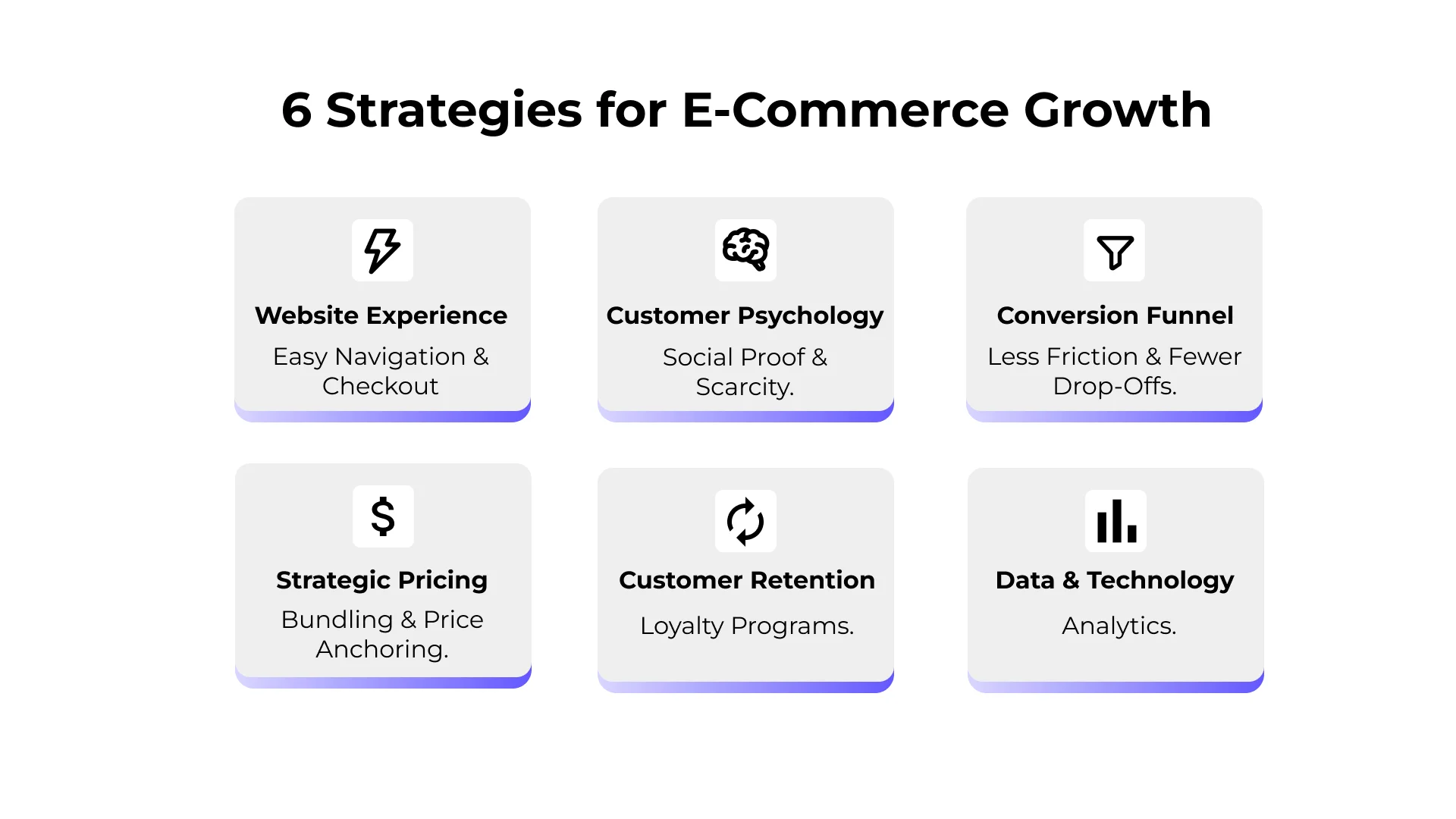
How to increase sales isn’t just about working harder—it’s about working smarter. Here are the most effective strategies proven to boost revenue:
- Optimize your website experience – Make navigation, mobile browsing, and checkout fast and friction-free
- Leverage customer psychology – Use social proof, personalization, and genuine scarcity to build trust and motivate action
- Improve your conversion funnel – Find drop-off points and make the path to purchase simpler and clearer
- Implement strategic pricing – Bundle products, anchor prices, and offer timely promotions that feel valuable
- Focus on retention – Even small gains in customer retention can produce outsized profit growth
- Use data and technology – CRM tools and analytics help you see what is working and where sales are leaking
The challenge facing most businesses today is real: 64% of sales reps are expected to miss quota this year, and the average shopping cart abandonment rate hovers near 70%. Even when you offer the right products at the right price, making a sale isn’t guaranteed. The key lies in understanding customer psychology, removing barriers in the buying journey, and consistently optimizing based on data.
Too many companies focus solely on driving more traffic when the real opportunity sits in converting the visitors they already have. When you fix friction points in your checkout process, add the right trust signals, or simply make your value proposition clearer, you can double or triple your revenue without spending an extra dollar on advertising.
I’m Jeffery Loquist, Vice President at SiteTuners. With over 18 years in digital marketing, including a decade managing conversion for a major e-commerce brand, I’ve helped countless businesses find how to increase sales by focusing on the customer experience. The strategies that follow are proven tactics I’ve used to drive measurable revenue growth across industries.
The Foundation: Understanding Customer Psychology and Your Value
To understand how to increase sales, start with what customers think, feel, and fear. Buying decisions are rarely just logical. They are shaped by trust, clarity, relevance, and confidence. When your business understands customer psychology, it can speak to real pain points, reduce hesitation, and make the next step feel easy. That is the foundation of stronger conversions, better experiences, and sustainable revenue growth.
Define and Showcase Your Unique Value Proposition (UVP)
Your Unique Value Proposition (UVP) answers what makes your brand special and why customers should choose you. It’s not a slogan, but a clear statement of the value you deliver, highlighting your advantages to your target market.
We believe a compelling UVP focuses on customer benefits, not just features. It highlights what sets your solution apart and addresses a specific customer problem. For instance, an ecommerce brand that clearly states, “We make watches from sustainable materials saturated in history” directly on its online store immediately communicates its unique appeal.
Identifying your UVP starts with market and competitor analysis. A strong UVP is relevant, offers quantifiable value, and clearly differentiates you. For example, one site dramatically increased its conversion rate from 1.9% to 4% by adding its value proposition to the website’s copy. Once identified, your UVP should be showcased everywhere—from your homepage to social media bios to product descriptions.
Leverage Social Proof and Customer Reviews
Social proof is a secret weapon for how to increase sales. People naturally copy others, believing that if many people like something, it must be credible. This bandwagon effect is powerful.
Consider this: 93% of customers actively seek reviews before buying a new product. Even more telling, 96% of customers seek negative reviews, showing a deep reliance on peer opinions. This makes customer reviews and testimonials essential trust signals. Many high-performing online stores showcase thousands of reviews from happy customers on their product pages, building immense credibility.
The volume of reviews matters as much as the rating. A product with many reviews, even with a slightly lower average rating, can outsell one with fewer reviews and a perfect score. Displaying testimonials and user-generated content makes potential customers feel more confident in their purchasing decisions.
Act on Customer Feedback and Personalize the Experience
Acting on customer feedback and personalizing their experience is a direct path to boosting sales and fostering loyalty.
When we ask customers about their pain points and aspirations, we gain a deeper understanding of their needs. This allows us to tailor our communications and product offerings, making them feel seen and valued. Personalization isn’t just a buzzword; nearly 90% of marketers have reported a positive ROI from using personalization in their campaigns.
The “mirroring effect” is a powerful technique. Subtly mimicking a customer’s language and phrases creates affinity and trust. Research suggests we connect more with people we perceive as similar, which can increase the chance of a sale. This also ties into active listening; 68% of B2B customers say a sales agent’s listening skills highly influenced their buying decision. By making interactions personal and relevant, we build lasting relationships that drive customer satisfaction and repeat business.
Mastering the Digital Storefront: How to Increase Sales Online
Our digital storefront is often the first, and sometimes only, impression we make on potential customers. To truly understand how to increase sales online, we must ensure this virtual space is not just visually appealing but also highly functional, intuitive, and trustworthy. From the moment a customer lands on our site to the final click of purchase, every element contributes to their journey and our conversion rates.

Optimize Your Website for a Seamless User Experience
A cluttered or complex website can be a major barrier to sales. A Google study found that website visitors determine aesthetics within 1/50th to 1/20th of a second, and often perceive intricate designs as less beautiful. Simplicity and clarity are key.
We prioritize intuitive website navigation, ensuring customers can easily find what they’re looking for. This includes clear category pages, effective search and filter functions, and breadcrumbs on individual product pages. Many successful ecommerce stores optimize their navigation to highlight bestselling products, guiding customers effortlessly.
Mobile optimization is non-negotiable today, as mobile search has already eclipsed desktop search in volume. Our sites must be fast, responsive, and easy to use on any device.
Finally, we must display essential trust signals. These elements build credibility and reduce perceived risk for customers. Our list of essential trust signals includes:
- Customer Reviews and Testimonials: As discussed, powerful social proof.
- Clear Return Policies: One study found that return policies sway 82% of purchasing decisions.
- Security Badges (SSL Certificate): An SSL certificate is paramount, especially for ecommerce sites handling payment information.
- Recognizable Payment Logos: Displaying logos of familiar payment processors builds confidence.
- Money-Back Guarantees: A strong money-back guarantee can significantly reduce customer apprehension.
- Professional Design and High-Quality Imagery: Well-presented products, much like well-presented food, are perceived as more valuable.
How to Increase Sales by Optimizing Your Checkout Process
The checkout page is where many sales dreams go to die. The average shopping cart abandonment rate at the checkout page is about 70%, representing billions in lost revenue. This is a critical area for us to focus on how to increase sales.
We strive to reduce friction by streamlining the checkout process. This means minimizing the number of steps, eliminating unnecessary form fields, and offering guest checkout options. Simplifying the page and allowing autofill to do its magic can significantly reduce abandonment.
Crucially, we offer multiple payment options. Customers expect flexibility at checkout, and expanding payment methods ensures a frictionless buying experience and higher conversion rates. Over 85% of merchants plan to accept new alternative payment methods (APMs) within the next one to three years, including mobile wallets and “buy now, pay later” services. Accelerated checkouts such as digital wallets often boast significantly higher checkout-to-conversion rates than standard checkouts, highlighting the power of simplified, diverse payment options. Some brands even show customers how they can split payments using installment providers, catering to modern preferences.
Recover Sales with Abandoned Cart and Remarketing Campaigns
Even with an optimized checkout, some customers will inevitably abandon their carts. But this doesn’t mean the sale is lost forever. Approximately $4 TRILLION worth of online merchandise was abandoned in incomplete shopping carts last year, and a staggering 63% of that was potentially recoverable. This is a massive opportunity for us to recover sales.
We implement robust abandoned cart email campaigns. These aren’t just polite reminders; they often include a sense of urgency or an exclusive discount to encourage immediate action. For example, a subject line like “25% off [product name] for the next 24 hours” with a countdown timer can be incredibly effective.
Beyond emails, remarketing is arguably the single most effective way to increase sales online. It keeps our brand top-of-mind for prospects who have shown interest, providing multiple opportunities to convert. We leverage platforms like Facebook to target lookalike audiences, reaching new users who share characteristics with our existing customers, and use remarketing ads to re-engage those who visited our site but didn’t convert. This multi-touch approach helps us close more deals by meeting customers where they are in their fragmented buying journey.
Drive Traffic with Content Marketing and SEO
While conversion optimization is our specialty, attracting the right audience is the crucial first step. Content marketing and Search Engine Optimization (SEO) are powerful, cost-effective strategies for how to increase sales by drawing in organic traffic.
Buyers use search engines 20% more year-on-year, and 68.7% are more likely to click on the top three results. This means that if we “rank” in those top positions for relevant searches, we significantly increase traffic to our site. Content marketing establishes credibility and positions us as a trusted advisor. A 2024 Pew Research Center study found that 58% of U.S. adults prefer getting their news from digital devices, highlighting the shift to online information consumption.
We create valuable web content—blog posts, guides, videos—that answers our customers’ questions and addresses their pain points. For example, a grooming brand might target terms like “how to grow a handlebar mustache” on its blog, attracting an audience actively seeking solutions related to their products. By optimizing product pages for SEO, including relevant keywords in meta titles, descriptions, and headings, we ensure our products appear when potential customers are searching. This strategy not only drives organic traffic but also pre-qualifies visitors, as they are actively searching for what we offer.
Driving Action with Strategic Offers and Pricing
Once we have a customer’s attention, the next step in how to increase sales is to motivate them to act. This often comes down to crafting compelling offers and intelligent pricing strategies that add value, create urgency, and encourage larger purchases.
_compressed.webp?alt=media&token=863eeb24-30c3-43ec-94b6-09b0f0803ea9 "Product bundle offer with individual items and a discounted price - how to increase sales")
Create Irresistible Discounts and Promotions
Everyone loves a good deal, and strategic discounts and promotions can be powerful catalysts for sales. Free shipping, in particular, is a game-changer: 47% of online shoppers will abandon their carts if extra costs, like shipping, are too high, and 62% won’t buy if shipping comes at an additional cost. Offering free shipping, perhaps with a minimum order threshold, can significantly boost conversion rates and average order value.
We also leverage various types of promotions to create urgency and encourage purchases:
- Flash Sales and Limited-Time Offers: These generate excitement and a fear of missing out (FOMO), driving immediate sales.
- Buy One Get One (BOGO) Deals: These encourage customers to purchase more than they initially intended.
- Holiday and Seasonal Promotions: Aligning offers with popular shopping periods can capitalize on increased consumer spending.
- Discounts for Repeat Business: A generous discount for repeat business incentivizes people to take advantage of the convenience of regularly receiving their favorite products.
The key is to use these offers strategically, avoiding constant discounting that might devalue your brand.
How to Increase Sales Through Strategic Upselling and Cross-selling
Upselling and cross-selling are two of the most effective ways to increase your average order value (AOV) and, consequently, your overall sales without acquiring new customers. In fact, upselling and cross-selling each generated 21% of companies’ revenue on average.
- Upselling involves offering a more expensive, upgraded version of a product a customer is already considering. If a customer is looking at a basic laptop, we might suggest a model with more memory or a faster processor, highlighting the added benefits.
- Cross-selling is about recommending complementary products or services that improve the initial purchase. If a customer buys a new phone, we might suggest a protective case, screen protector, or wireless earbuds.
Product bundling is a fantastic way to implement both. By packaging related products or services together at a combined, often discounted, price, we make it easier for customers to get everything they need in one purchase while increasing the perceived value. Many high-performing ecommerce brands use product bundling to add value. This strategy also leverages a psychological principle: once a customer has made a small purchase, they are more likely to buy additional items.
Foster Loyalty with Referral and Rewards Programs
Customer loyalty is the bedrock of sustainable growth. Not only are existing customers more likely to make repeat purchases, but they also become powerful advocates for our brand. According to Bain research, a five-percent boost in customer retention can increase profits by 25%.
We design customer loyalty programs and referral programs that encourage repeat business and attract new clients. For example, some beverage brands encourage existing customers to buy again with exclusive loyalty program merchandise. When customers feel valued, they are more likely to stay and refer others. We know that 88% of consumers trust personal recommendations more than any other channel, and customers who get “five-star” experiences are 3.1 times more likely to recommend a brand.
A successful referral program offers compelling incentives (cash, credits, discounts) to both the referrer and the referred, making the process seamless. For example, an online bookstore might offer a code where the referrer gets a $10 credit and the friend gets 10% off their first purchase. We’ve also learned that surprise rewards can make people happier and more positive towards our brand than expected promotions. This adds a delightful element that strengthens loyalty.
Use Pricing Psychology to Influence Purchases
Pricing is more than just numbers; it’s a powerful psychological tool. Understanding how customers perceive value can significantly influence their purchasing decisions.
- Price Anchoring: This cognitive bias involves presenting a higher-priced item first (the “anchor”) to make subsequent, lower-priced items seem more reasonable or a better deal. For instance, displaying a crossed-out original price next to a sale price makes the current offer appear more attractive. Neil Patel discusses decoy pricing in detail, noting how companies leverage this “asymmetric dominance effect” to guide purchasing behavior.
- Tiered Pricing: Offering different tiers of a product or service can make a mid-range option appear to be the “smartest” choice, as customers often gravitate away from the cheapest and most expensive options.
- Decoy Effect: Introducing a third, less attractive option can make one of the other options seem more appealing, subtly steering customers towards a particular choice.
Finally, we consider the power of a money-back guarantee. While it might sound counterintuitive to offer a way out, a money-back guarantee plays a crucial role in building customer trust and encouraging sales by reducing perceived risk. One study found that return policies sway 82% of purchasing decisions, with many online shoppers consulting the policy before placing their first order. This commitment signals confidence in our product and often leads to higher conversion rates.
Optimizing Your People, Processes, and Technology
The most brilliant strategies won’t succeed without the right people, streamlined processes, and cutting-edge technology. To truly master how to increase sales, we must continuously optimize these internal pillars, ensuring our teams are empowered, our operations are efficient, and our decisions are data-driven.
Improve and Formalize Your Sales Process
Many businesses operate with an informal sales process, where everyone “sort of knows” what to do. But for predictable revenue growth, we need a formalized, repeatable sales process. This involves mapping out the customer journey from initial contact to final purchase, breaking it down into distinct stages within a sales funnel (awareness, interest, decision, action).
By mapping our sales pipeline, we can define Key Performance Indicators (KPIs) for each stage, allowing us to measure conversion rates and identify bottlenecks. For example, if 50% of leads move to the quote stage, 20% to negotiations, and 25% close, we can calculate precisely how many leads we need to talk to to sell a certain number of units. This clear pipeline view helps us forecast sales more accurately and pinpoint where our sales and marketing strategies need refinement. We also apply the 80-20 rule, focusing on the 20% of leads most likely to convert, identified through data analysis.
Regularly reviewing sales data and individual performance in sales meetings allows us to quickly identify issues, such as a sudden increase in quote turnaround time, and implement targeted improvements. A well-defined sales process is the blueprint for consistent success.
Leverage Technology to Improve Efficiency
In today’s sales environment, technology isn’t just an advantage—it’s a necessity. Customer Relationship Management (CRM) software is at the heart of our efforts to improve efficiency and make data-driven decisions.
CRM systems allow us to collect, store, and update customer records in one centralized location. This not only streamlines workflows but also enables better communication and collaboration across teams. Most CRMs can automate administrative processes, like generating activity reports and metrics, freeing up sales reps from non-selling tasks. This is crucial because over a third of employees (37%) report using too many tools, and 36% state that working across different systems disrupts selling productivity.
CRM also plays a vital role in sales analytics. Tools like Shopify analytics allow us to track key metrics, understand customer behavior, and prioritize our marketing efforts. For instance, if Shopify analytics shows that Facebook drives 55% of traffic but has a lower conversion rate than TikTok, which drives less traffic but has a higher conversion rate, we can strategically shift our ad spend. By embracing technology, we empower our teams to work smarter, not just harder.
Here’s a quick comparison of how CRM-based tracking lifts sales monitoring:
| Feature | Manual Lead Tracking | CRM-Based Lead Tracking |
|---|---|---|
| Data Storage | Dispersed spreadsheets, notes, individual inboxes | Centralized, accessible database |
| Collaboration | Difficult, prone to errors, delayed updates | Real-time updates, shared visibility across teams |
| Reporting & Analytics | Time-consuming, manual data aggregation, limited insights | Automated reports, customizable dashboards, deep insights |
| Lead Scoring | Subjective, inconsistent | Automated, data-driven, consistent |
| Forecasting | Guesswork, unreliable | Data-backed, more accurate, adaptable |
| Productivity | Reps spend time on admin, less on selling | Reps focus on selling, admin automated |
Motivate and Empower Your Sales Team
Our sales team is on the front lines, and their motivation directly impacts our revenue. We believe in motivating employees through a combination of praise, a positive work environment, and strategic incentives.
Training and coaching are continuous processes. Regular one-on-one meetings help us review performance, address stalled deals, and coach reps through challenges. We also emphasize soft skills: 68% of B2B customers said sales agents’ listening skills highly influenced their buying decision. By training our team to actively listen and understand customer pain points, we build trust and increase conversion rates.
Goal setting is another crucial component. We use the S.M.A.R.T. framework (Specific, Measurable, Achievable, Relevant, Time-bound) to set clear objectives for our sales reps. CRM systems allow us to set and track these goals, monitoring individual and group performance throughout the day. This accountability, combined with a supportive environment and recognition for achievements, empowers our team to reach their full potential and significantly contributes to how to increase sales.
Frequently Asked Questions about Increasing Sales
What are the most impactful ways to increase sales?
The most impactful ways to increase sales often involve optimizing existing processes rather than solely focusing on acquiring new leads. We find that improving conversion rates, increasing the Average Order Value (AOV), and prioritizing customer retention yield significant results. While new leads are important, ensuring your current traffic and customer base are fully leveraged is a more efficient path to growth. This means streamlining your sales funnel, enhancing the customer experience, and strategically upselling or cross-selling to existing customers.
Can offering free shipping really increase sales?
Yes, absolutely! Offering free shipping is a highly effective strategy for how to increase sales, especially online. Research shows that 62% of online shoppers won’t buy from a retailer if shipping comes at an additional cost, and 47% will abandon their carts if extra costs are too high. Free shipping reduces a major friction point in the purchasing process and meets customer expectations. To make it even more impactful, consider offering free shipping with a minimum order threshold, which can encourage customers to add more items to their cart, increasing your Average Order Value (AOV).
What are trust signals and how do they impact sales?
Trust signals are elements displayed on your website or during interactions that build credibility and reduce perceived risk for potential customers. They are crucial for how to increase sales because they make customers feel more confident and secure in their purchasing decisions. Examples include:
- Customer Reviews and Testimonials: Show that others have had positive experiences.
- Security Badges (e.g., SSL certificate, antivirus logos): Indicate that customer data is protected.
- Clear Return and Refund Policies: Reassure customers that they can return products if unsatisfied.
- Recognizable Payment Gateway Logos: Familiar logos like Visa, Mastercard, PayPal, and Shop Pay build confidence.
- Professional Website Design: A well-designed, functional site looks legitimate and reliable.
- Money-Back Guarantees: Offer a safety net, making the purchase feel less risky.
- Media Mentions or Awards: Show external validation of your brand.
By prominently displaying these trust signals, we address customer anxieties and encourage them to complete their purchase.
Conclusion
Mastering how to increase sales is a journey of continuous improvement, driven by a deep understanding of our customers and a commitment to optimizing every touchpoint. The strategies we’ve outlined—from leveraging the power of customer psychology and refining our digital storefronts, to crafting strategic offers and streamlining our internal processes—provide a comprehensive roadmap for sustainable growth.
At SiteTuners, we believe that by focusing on user experience and making data-driven decisions, businesses can open up their full revenue potential. It’s about creating seamless, trustworthy, and personalized experiences that not only attract new customers but also foster lasting loyalty. By implementing these proven tactics, we can help you transform your sales performance and achieve remarkable results.
To dive deeper into these strategies and find how to increase sales for your business, we invite you to explore our resources. Learn more about optimizing your ecommerce performance on our website.