Optimizing the Subscription Customer Journey
Optimizing a subscription model means improving the subscriber experience across every stage of their relationship with your business. By removing unnecessary friction, you help prospective buyers understand your offerings, complete signup smoothly, and manage their accounts with confidence.
A subscription is not a one-time transaction; it is an ongoing relationship. Subscription model optimization treats each interaction—from the first visit to routine notifications—as an opportunity to build trust. When each step aligns with user needs, customers feel secure starting and maintaining their subscriptions.
Step-by-Step Optimization Across Every Subscriber Stage
Systematic optimization relies on targeted reviews rather than guesswork. Evaluating each stage of the subscriber journey helps identify specific points of friction and guide structured improvements.
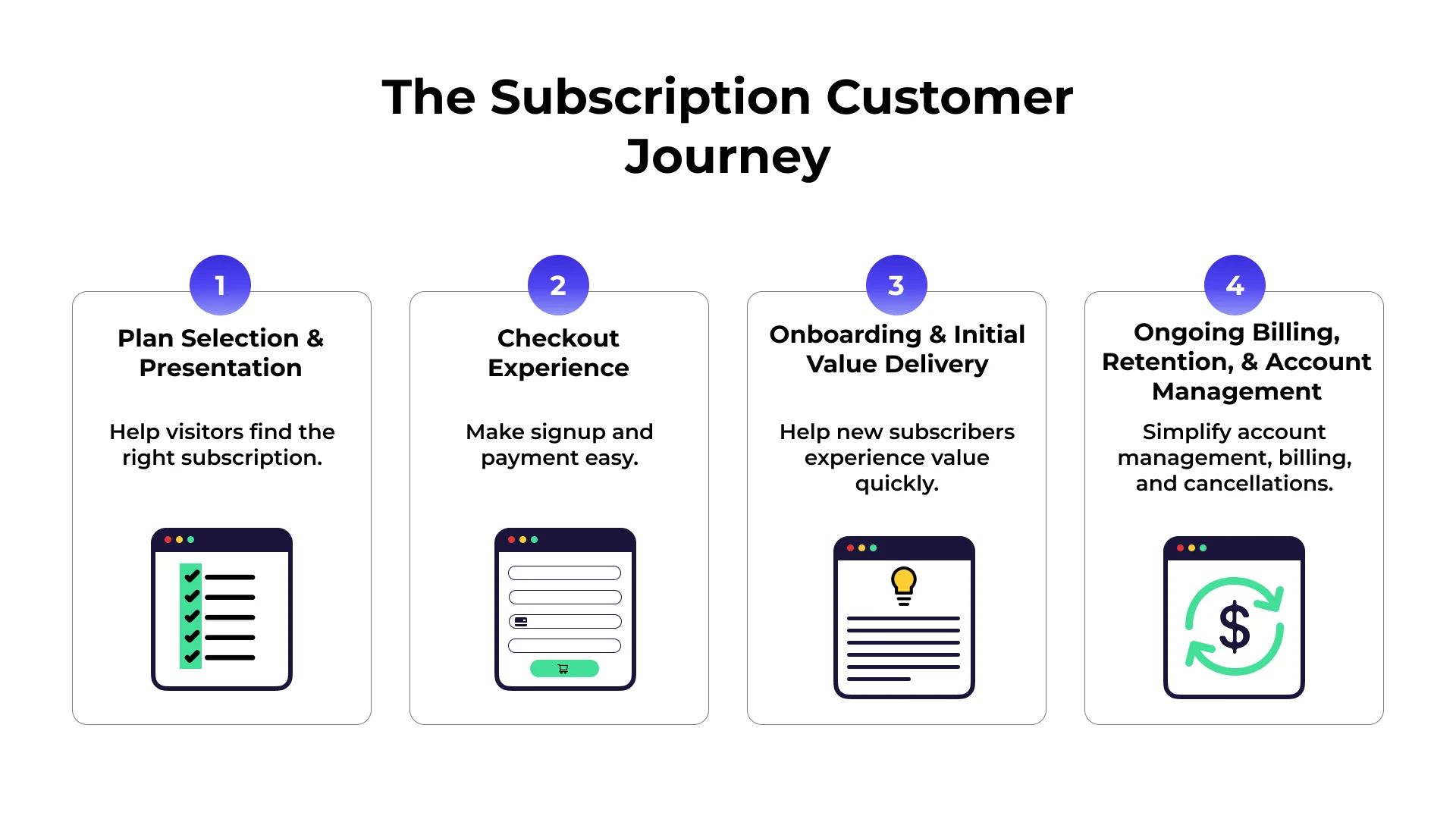
Stage 1: Plan Selection and Presentation
At this stage, visitors evaluate whether a recurring plan fits their specific needs.
- What to look at: Review plan comparison tables, plan names, and feature breakdowns.
- What it may mean: High drop-offs on pricing pages often point to choice overload, unclear differences between options, or missing guidance for specific user groups.
- Potential tests:
- Test visual cues that clarify options for specific use cases.
- Test simple interactive questions that guide visitors to the most relevant plan.
- Test different ways to summarize included features and costs clearly.
Stage 2: Checkout Experience
After selecting a plan, users need a straightforward path to complete the transaction without unexpected obstacles.
- What to look at: Review form completion rates, form errors, payment failure notices, and mobile layout usability.
- What it may mean: Checkout abandonment often indicates unexpected costs, lengthy forms, lack of preferred payment options, or unclear recurring terms.
- Potential tests:
- Test real-time field guidance and address lookup tools to reduce typing effort.
- Test a focused, single-column checkout design that summarizes key details and policies alongside payment fields.
- Test offering direct payment methods such as digital wallets alongside standard card entry.
Stage 3: Onboarding and Initial Value Delivery
Early experiences shape long-term subscriber engagement. When new users quickly see value from their purchase, they are more likely to stay engaged.
- What to look at: Monitor initial setup completion, core tool usage, login activity, and welcome message interaction.
- What it may mean: Early drop-offs in activity suggest complex setup requirements, unclear initial steps, or unmet expectations from the sales page.
- Potential tests:
- Test step-by-step setup checklists or brief welcome walkthroughs for new accounts.
- Test automated follow-up messages that help users complete key setup milestones.
Stage 4: Ongoing Billing, Retention, and Account Management
Long-term subscriber satisfaction relies on transparent account management and straightforward self-service options.
- What to look at: Payment failure rates, account management portal usage, and billing support requests.
- What it may mean: Cancellations can happen when subscribers struggle to update billing details or feel unable to manage their accounts easily.
- Potential tests:
- Test self-service tools that allow subscribers to update payment methods and manage account preferences independently.
- Test advance notifications that summarize account activity and upcoming billing dates.
- Test clear in-account notices and reminders when a payment fails.
Stage 5: Offboarding and Cancellation Experience
When a subscriber considers canceling, the cancellation process provides a chance to understand their reasons and offer helpful alternatives. The goal is not to make cancellation difficult. It is to understand why subscribers leave and offer useful alternatives when they fit the customer’s needs.
- What to look at: Cancellation survey feedback, completed cancellations, and adoption of flexible account options.
- What it may mean: If subscribers frequently leave due to temporary needs or changing schedules, an inflexible all-or-nothing process can result in preventable losses.
- Potential tests:
- Test offering flexible pause options during the cancellation request.
- Test brief, single-step feedback forms to identify cancellation reasons and present relevant self-service solutions.
Tracking Long-Term Subscription Health
Changes made to pricing pages, checkout forms, and onboarding influence long-term subscriber behavior. Tracking both initial signups and ongoing account activity provides a complete picture of performance.
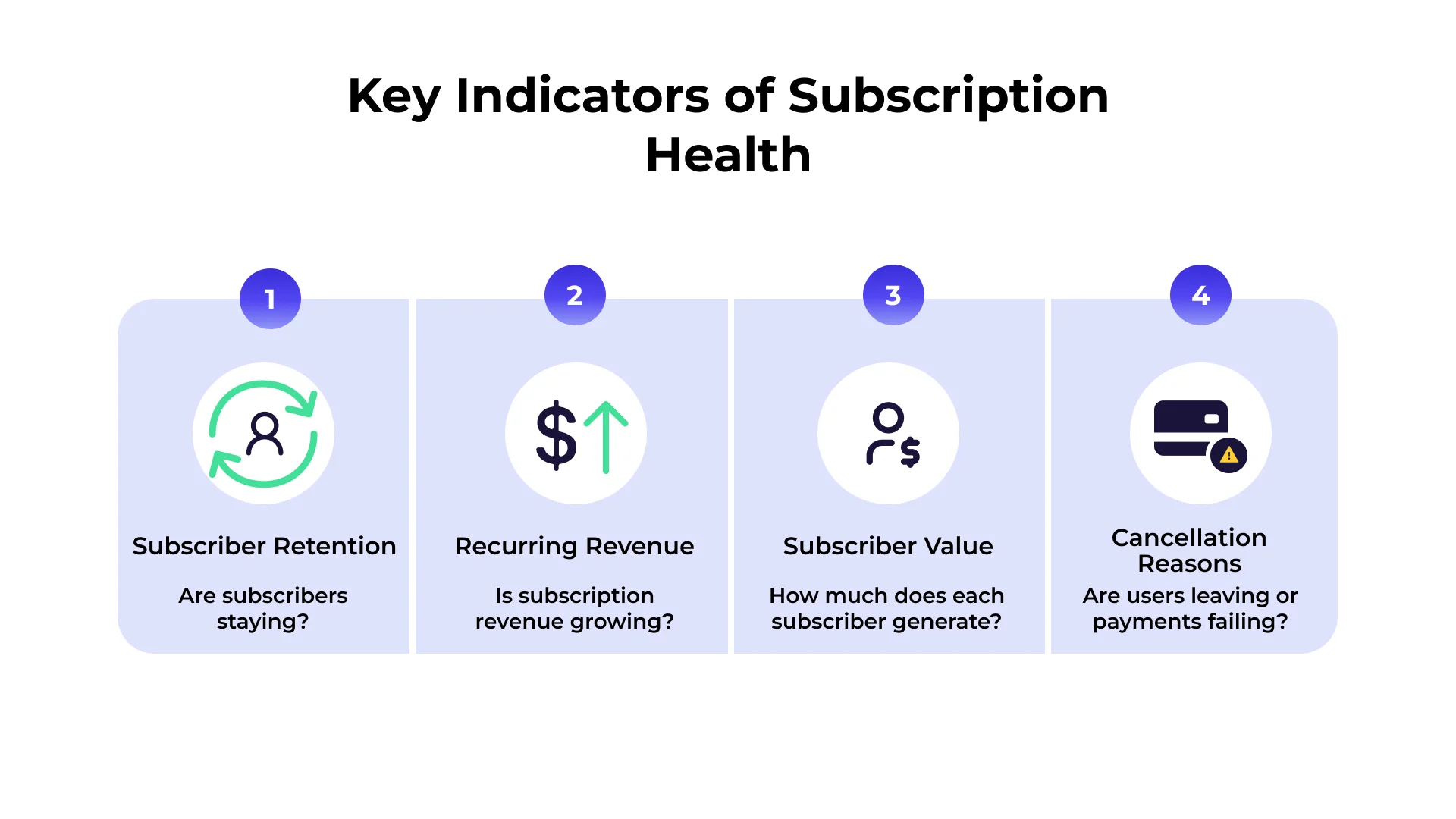
Key Indicators of Subscription Health
To evaluate the impact of customer journey improvements, monitor ongoing subscriber behavior across several key areas:
- Subscriber Retention Trends: Track active subscription rates over time to verify that new subscribers remain engaged.
- Recurring Revenue Changes: Monitor revenue gains from account growth alongside losses from cancellations to assess overall stability.
- Long-Term Account Value: Measure average revenue generated per subscriber to understand lasting business impact.
- Intentional vs. Payment-Related Cancellations: Distinguish between users who choose to cancel and those lost due to expired cards or billing issues so you can address the root cause effectively.
Troubleshooting Common Drop-Offs
Use this reference guide to match common subscriber drop-offs to practical testing ideas:
| Drop-Off Symptom | What It May Mean | Potential Tests |
|---|---|---|
| High Pricing Page Bounce Rate | Plan options are unclear, or visitors face too many complex choices. | Clarify differences between plans; add an expandable feature list; highlight options based on user goals. |
| Checkout Abandonment | Unexpected costs, lengthy forms, or uncertainty around recurring terms. | Reduce optional fields; clearly display security signals; test digital wallet payment options. |
| Early Usage Drop-Off | Initial setup is confusing or takes too long for new subscribers. | Introduce interactive setup checklists; send milestone-based reminders; provide clear walkthrough resources. |
| Ongoing Cancellations | Subscriber needs have changed or self-service options are missing. | Offer self-service account management and temporary pause options. |
| Payment Failure Drop-Offs | Card expiration or lack of reminders when recurring payments fail. | Set up payment reminder messages; display clear account banners for updating billing info. |
Frequently Asked Questions About Subscription Optimization
How do you optimize the full subscription customer journey?
Optimizing the subscription customer journey requires looking at every interaction from initial plan selection through account management and offboarding. Teams focus on clear pricing details, simplified checkout, practical onboarding support, self-service account tools, and flexible cancellation alternatives to build lasting trust.
How should you design and optimize a subscription pricing page?
Subscription pricing pages perform best when visitors can immediately understand plan options and recurring terms. Clearly outline what each plan includes, guide visitors based on their needs, and state recurring costs and cancellation policies upfront to remove uncertainty before checkout begins.
How do you optimize a subscription checkout?
Subscription checkout pages require clear communication about recurring commitments. Keep forms short, offer convenient payment options like digital wallets, display clear trust signals, and explicitly summarize recurring costs and account management policies beside the payment button.
How can you reduce subscriber churn during cancellation?
Reducing subscriber churn starts with offering flexible choices when someone requests cancellation. Many subscribers cancel due to temporary budget or schedule shifts rather than dissatisfaction. Presenting easy options to pause an account or adjust account preferences helps retain customers who might otherwise leave.
What metrics should you track after optimizing subscriptions?
Teams should monitor long-term retention rates, overall revenue stability, average revenue per subscriber, and the breakdown between voluntary cancellations and failed card charges. Tracking these numbers reveals whether checkout improvements lead to sustainable subscriber growth.
Conclusion

Optimizing a subscription model requires looking beyond isolated price changes or temporary promotions. Meaningful improvements happen when you identify and resolve friction across every stage of the subscriber lifecycle.
By designing a clear, cohesive experience—from initial plan comparison through onboarding, self-service account management, and offboarding—you establish ongoing customer trust and steady business growth.