What Should You Expect From a CRO Agency?
A conversion rate optimization (CRO) agency helps you learn why visitors do not take the next step on your website—and then improve that experience. The next step may be making a purchase, requesting a demo, booking an appointment, or completing another important action.
A good agency does more than suggest button colors or send a list of A/B test ideas. It uses a clear process to understand your visitors, find problems in the customer journey, decide what matters most, test improvements, and share what it learns.
The process should be easy to follow:
Research → Identify Problems → Build Hypotheses → Prioritize → Design → Test → Measure → Learn → Iterate
Your agency should explain what it is doing at each stage, why it matters, and what it needs from your team.
Research and Diagnosis
A CRO program should begin with research, not assumptions. The agency looks for places where visitors get confused, lose confidence, or leave before converting.
Expect the team to review your most important pages, conversion paths, and existing data. They may look at product pages, lead forms, checkout steps, landing pages, and calls to action. The goal is to find the biggest barriers before deciding what to change.
A strong early review often includes:
- Website and UX reviews: Looking for unclear messages, weak page structure, distracting content, or difficult forms.
- Analytics review: Checking whether key actions, funnels, and events are tracked correctly.
- User research: Reviewing session recordings, heatmaps, surveys, customer feedback, or interviews to understand real visitor behavior.
- Journey analysis: Mapping the route visitors take from an ad, search result, email, or social post through to conversion.
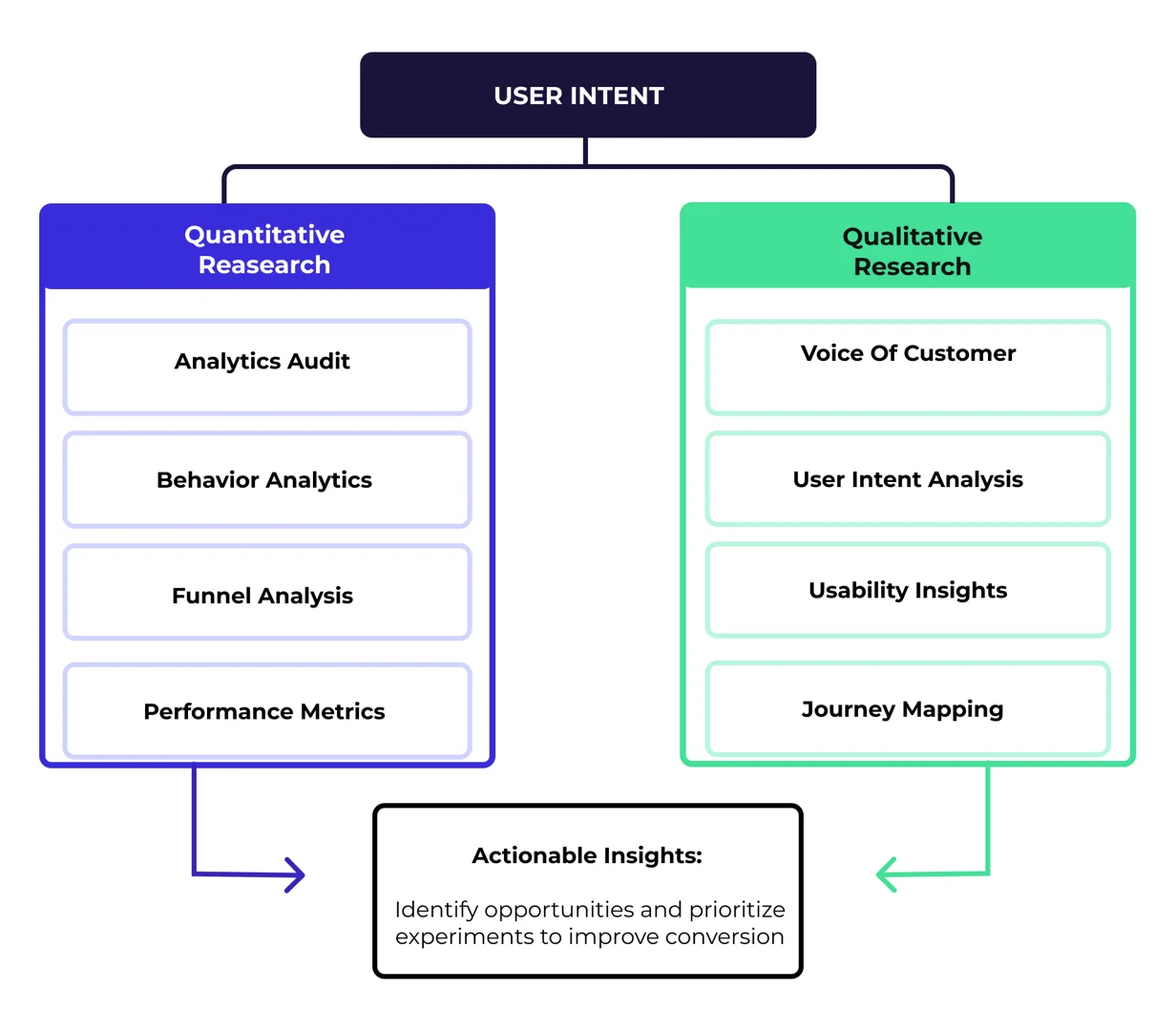
Research gives the agency a reason for each recommendation. Instead of guessing what might improve results, it can point to a clear problem and explain why solving it should help.
Design, Development, and Testing
Once the agency understands the problem, it turns the findings into a plan for improvement. That may mean making a page easier to scan, clarifying the value of an offer, reducing form fields, improving trust signals, or making the next step more obvious.
The agency should connect each proposed change to a visitor need. For example, if visitors leave a form because it feels long or unclear, the team may simplify the form, explain why information is needed, or improve the supporting copy.
From Ideas to Testable Changes
A good CRO agency organizes ideas into clear hypotheses. A hypothesis states what the team plans to change, who it is meant to help, and why it may improve an important result.
The agency should then prioritize ideas based on likely impact, evidence, effort, and your business goals. This helps the team focus on meaningful opportunities instead of testing minor changes simply because they are easy to make.
A dedicated CRO agency such as SiteTuners can bring research, UX, analytics, testing, and optimization together in one program. That can be especially helpful when your business needs specialized support without building a full CRO team internally.
What the Agency May Build and Implement
Depending on the project, a CRO agency may:
- Create wireframes or page mockups.
- Improve page structure, messaging, forms, and calls to action.
- Write or refine copy that answers visitor questions.
- Build one or more test versions of a page or experience.
- Set up and launch A/B tests.
- Check that changes work correctly on desktop, tablet, and mobile devices.

Reliable Testing and Analysis
Testing should be careful, not rushed. Your agency should set up experiments correctly, give them enough data to produce a useful result, and avoid declaring a winner too early.
You do not need a statistics lesson to ask good questions. The agency should be able to explain, in plain English, whether a result looks reliable, what limits apply, and whether it affected the business outcome that matters.
It should also look beyond one overall number when needed. A change may work differently for mobile visitors, returning customers, or visitors from a particular channel. The goal is to make sound decisions, not chase a short-term lift that does not hold up.
Working With a CRO Agency
A CRO agency should make it easy for your team to stay informed and involved. You should know what the team is researching, which ideas are planned, what is being tested, and what happens next.

Dedicated CRO Agency
A dedicated agency can provide specialized skills across research, UX, analytics, copy, testing, development, and ongoing optimization. This model can suit a business that wants a structured program but does not want to hire and manage every CRO role internally.
The agency leads the work while your team provides business context, approves key decisions, and helps with access to the right people, systems, and brand materials.
Hybrid Support Model
In a hybrid model, the agency works alongside your internal marketing, product, design, or development team. It may fill a specific skills gap, provide extra capacity, or lead the research and testing strategy while your team handles some implementation.
Either model can work well when responsibilities are clear. Before work begins, agree on who owns approvals, design decisions, development work, access to data, and final rollout decisions.
Communication and Shared Learning
Expect regular check-ins and a shared place to review plans and results. The agency should document test ideas, research findings, designs, results, and next steps so your team can learn from every experiment.
Clear communication helps prevent delays and keeps the program focused on the business goals you agreed on.
How to Evaluate a CRO Agency
Choosing a CRO agency is not only about finding a team that can run tests. Look for a partner that can explain its process, connect recommendations to evidence, and work well with your people and technology.
Ask practical questions such as:
- Do you start with research and diagnosis? A good agency should first understand the problem, not jump straight to a favorite test idea.
- How do you decide what to test? Look for a clear method for prioritizing opportunities based on evidence and business value.
- Which skills are available on your team? CRO work may involve UX, analytics, copy, design, development, and testing.
- Can you explain why you recommend a change? Recommendations should be tied to visitor behavior, research, or data—not personal preference.
- How will you measure success? The answer should match your business goals, such as purchases, qualified leads, revenue per visitor, or movement through an important funnel.
- Will you focus on business outcomes instead of clicks alone? A higher click rate is not useful if it does not support a meaningful result.
- How will you share what you learn? Ask to see how the agency reports results and recommends next steps.
- Can you work with our existing team and technology? The agency should be clear about the access, tools, and collaboration it needs.
What Good Reporting Looks Like
A CRO agency should make reporting useful for decision-making. After research or a test, you should be able to see:
- What was reviewed or tested.
- Why the agency chose that opportunity.
- What happened.
- What the team learned about visitors.
- What should happen next.
The most useful reports connect activity to the measures your business cares about. Depending on your goals, that may include revenue, purchases, qualified leads, revenue per visitor, or progress through a key step in the customer journey.
Not every test will create a large win. A good agency treats both positive and negative results as useful information, then applies those lessons to the next priority.
Frequently Asked Questions About CRO Agency Partnerships
What does a CRO agency usually do first?
A professional CRO agency usually begins by learning about your business, customers, website, and goals. It reviews available data and visitor behavior to identify the biggest problems before it recommends changes or launches tests.
What access does a CRO agency need?
The exact access depends on the engagement, but the agency may need access to your web analytics, testing platform, tag manager, customer feedback tools, and relevant website systems. It should explain what it needs, why it needs it, and how access will be managed.
What does my internal team need to provide?
Your team usually needs a clear point of contact who can share business goals, answer questions, coordinate access, and approve major recommendations. You may also involve people from marketing, product, design, development, sales, or customer service when their input is useful.
How do we know whether CRO is working?
Start with the business outcome that matters most for the page or journey being improved. That could be purchases, qualified leads, revenue, revenue per visitor, or completion of an important funnel step. Your agency should explain how it will measure progress and what it learned from each test.
Will every A/B test produce a winner?
No. Some tests may show little difference, and others may reveal that an idea was not as helpful as expected. That is still valuable when the agency documents the result and uses it to make a better next decision.
Conclusion
A good CRO agency helps your business understand what visitors need, diagnose problems in the customer journey, prioritize the right improvements, test them carefully, measure the results, and keep learning.
The value is not simply in running A/B tests. It is in following a structured process that connects research, UX, analytics, testing, and business outcomes.
Looking for dedicated CRO support backed by more than 20 years of experience? SiteTuners’ conversion rate optimization services combine research, UX, analytics, and testing to identify opportunities to improve your website. Get a free expert review and find out where your website may be losing conversions.