How virtual tours can build trust, reduce buyer hesitation, and help businesses improve website conversions.
Think about the last time you booked a hotel, looked at a new home, or considered visiting a business for the first time. Chances are, you wanted to know what the place looked like before making a decision. You probably reviewed photographs, read descriptions, and perhaps checked reviews to get a better sense of what to expect.
Now imagine being able to walk through that location without leaving your computer or picking up your phone. You could explore the rooms, examine the facilities, and get a much better feel for the environment before deciding whether to visit in person.
That’s what virtual tours make possible. However, from a conversion rate optimization (CRO) perspective, the real value isn’t the technology itself. It’s the ability to help visitors make decisions with greater confidence.
At SiteTuners, we’ve spent more than 20 years helping companies improve their websites so that more visitors become customers. One thing we’ve learned is that when people don’t have enough information to make a decision, they tend to put that decision off or go somewhere else. Virtual tours can help overcome that problem, particularly for businesses where the physical environment plays an important role in the buying process.
In this article, we’ll look at five virtual tour companies, what they offer, and how businesses can use virtual tours to improve the customer experience and potentially increase conversions.
Why Virtual Tours Matter for Conversion Rate Optimization
At SiteTuners, we evaluate websites based on three fundamental questions visitors ask, whether they realize it or not:
- Am I in the right place?
- How do I feel about this?
- What am I supposed to do here?
These questions help us understand why visitors either move forward or abandon a website. Interestingly, a well-implemented virtual tour can help address all three.
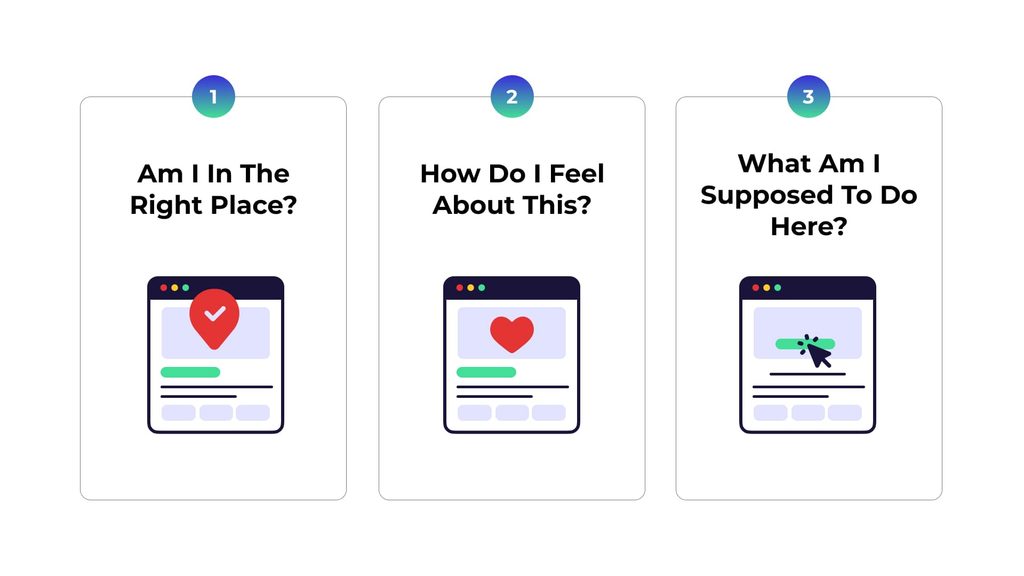
Am I in the right place? Imagine someone looking for an assisted living community for a parent. They’re probably comparing several facilities, trying to understand the accommodations, dining areas, common spaces, and overall environment. A virtual tour can answer many of those questions before they make their first phone call. Instead of wondering whether the community meets their needs, they can begin evaluating it immediately.
How do I feel about this? Purchasing decisions aren’t purely logical. People need to feel comfortable with the companies they’re considering. Professional photography and virtual tours can help build confidence by showing visitors what they can actually expect. This is particularly important when someone is considering a significant financial or emotional commitment, such as choosing a home, a university, or a senior living community.
What am I supposed to do here? This is where businesses sometimes miss the opportunity. They invest in an impressive virtual tour but forget that the objective isn’t simply to entertain visitors. It’s to help them take the next step. That might mean scheduling an appointment, requesting information, booking a room, or contacting a salesperson.
The important thing to understand is that virtual tours don’t automatically improve conversions. Like any other website feature, they need to be implemented with a clear purpose and connected to the visitor’s decision-making process.
5 Virtual Tour Companies to Consider
There are many virtual tour providers in the United States, offering everything from individual property tours to nationwide content production. The following five companies provide services for businesses and organizations looking to incorporate immersive visual experiences into their marketing.
1. Momentum 360 — Nationwide Virtual Tours and Visual Marketing Services
Website: https://www.momentum360.com/
Momentum 360 provides virtual tours, professional photography, video production, and related digital marketing services for businesses that want to showcase their physical locations online. The company’s services include Matterport 3D tours, CloudPano experiences, Google Street View tours, and other visual content designed for commercial properties and businesses with multiple locations.
One of Momentum 360’s distinguishing characteristics is its nationwide production capability. According to the company, it has a network of more than 1,500 photographers, allowing it to coordinate photography and virtual tour projects across different geographic markets. Its experience includes working with franchise brands such as Snap Fitness, The DRIPBaR, and Midas.
This type of coordinated production can be particularly valuable for companies operating dozens or even hundreds of locations. Consider a national franchise where individual operators are responsible for their own photography and marketing materials. Without coordination, one location might have excellent virtual tours while another relies on outdated photographs. That inconsistency can affect how customers perceive the brand.
Momentum 360 offers businesses a way to approach visual content production more consistently while still showcasing the characteristics of individual locations. Its combination of virtual tours, photography, and video also gives companies several options for incorporating visual content into their websites and other marketing channels.
The CRO opportunity: From a conversion optimization standpoint, one of the most important considerations is matching the visual experience to what visitors are actually looking for. Someone researching a specific fitness center probably wants to see that location’s equipment, facilities, and overall environment, not a generic corporate presentation.
A well-placed virtual tour can help answer those questions and reduce the uncertainty that might otherwise prevent someone from scheduling a visit. But we’d also want to make sure there’s a clear call to action nearby, such as “Schedule a Tour” or “Explore Membership Options.” After implementing the experience, we’d measure whether visitors who interact with it are more likely to take the desired action.
For businesses requiring nationwide coverage, coordinated content production, and a combination of virtual tours and other visual marketing services, Momentum 360 offers a comprehensive range of capabilities worth considering.
2. Mass Interact — Interactive Virtual Tours and Google Maps Experiences
Website: https://www.massinteract.com/
Mass Interact creates interactive 360-degree virtual tours that allow visitors to explore business locations remotely. The company also offers Google Street View experiences, helping businesses present their physical spaces through Google Search and Maps.
Its virtual tour capabilities include features such as interactive information points and guided or narrated experiences. These can provide additional context as visitors explore a location, rather than leaving them to navigate a series of images without explanation.
For example, a business might use interactive information points to explain particular facilities, services, or features that aren’t immediately obvious from the imagery alone. This gives companies another way to communicate useful information while visitors are actively exploring their environment.
The CRO opportunity: We would look at how the virtual tour helps answer questions visitors might otherwise have to ask by telephone or email. Imagine someone researching a restaurant, event venue, or service location. The more useful information they can gather during that initial visit, the better prepared they may be to make a decision.
However, we’d also examine what happens after visitors finish exploring. Can they easily find the phone number, request information, or schedule an appointment? The tour should be part of the conversion process, not a separate experience that leaves visitors wondering what to do next.
3. LCP Media — Virtual Tours and Visual Content for Multifamily Properties
Website: https://www.lcpmedia.com/
LCP Media provides virtual tours and visual marketing services for property owners and managers, with a particular focus on apartment communities and multifamily housing. Its services include interactive tours, professional photography, 3D renderings, and drone imagery.
The company’s TourBuilder platform allows prospective residents to explore apartment units, floor plans, and community amenities remotely. LCP Media also offers features that support guided experiences and provide information about how visitors interact with virtual tours.
These capabilities can be useful for property management companies operating multiple communities, especially when prospective residents want to compare different layouts and amenities before deciding which properties to visit.
The CRO opportunity: Apartment websites present an interesting conversion challenge. Getting more people to schedule property tours sounds like a good objective, but what happens when those visitors arrive and discover that the apartments don’t meet their needs?
A virtual tour can help prospective residents qualify properties for themselves. Someone who needs a large kitchen, a particular floor plan, or specific amenities may be able to determine whether an apartment is worth visiting before scheduling an appointment.
From a CRO perspective, we’d want to measure more than the number of leads generated. We’d also look at the quality of those leads and how frequently scheduled visits result in completed rental applications. After all, the goal isn’t simply to generate more appointments. It’s to help the right people find the right property.
4. HomeJab — Real Estate Photography, Video, and 3D Virtual Tours
Website: https://homejab.com/
HomeJab provides real estate media services, including professional photography, aerial imagery, video, floor plans, and 3D virtual tours. The company works with real estate professionals who need visual content to market residential properties.
Its virtual tour services include Matterport 3D experiences, allowing prospective buyers to explore a property remotely and get a better understanding of its layout. Depending on the tour and available features, buyers may also be able to view floor plans and examine the relationship between different rooms.
For agents and brokerages, these services provide additional ways to present property information online. Rather than relying exclusively on individual photographs, a virtual experience allows potential buyers to see how spaces connect and get a better sense of the property as a whole.
The CRO opportunity: Real estate websites often attract visitors who are browsing multiple properties, sometimes over several weeks or months. The challenge is helping those visitors narrow their choices and identify properties that genuinely interest them.
Virtual tours can make that evaluation easier, particularly when combined with accurate floor plans, pricing, location information, and property details. However, we wouldn’t want the immersive experience to distract visitors from the information they need to make a decision.
We would also pay close attention to the calls to action. After someone finishes exploring a property, is it obvious how to schedule a showing, contact the listing agent, or request additional information? Making that next step easy can be just as important as the quality of the tour itself.
5. Concept3D — Virtual Tours and Interactive Campus Experiences
Website: https://concept3d.com/
Concept3D provides virtual tour software and interactive digital experiences for organizations, including colleges and universities. Its technology helps institutions present campus buildings, facilities, and other physical locations through connected virtual experiences.
The platform supports interactive elements such as informational hotspots, embedded content, and lead-generation features. It also offers analytics capabilities, including integrations that can help organizations understand how visitors interact with their virtual experiences.
For universities and other institutions, virtual tours provide a way for prospective students and families to explore locations without requiring an immediate campus visit. Visitors can become familiar with academic buildings, recreational facilities, residence halls, and other parts of the campus while researching their options.
The CRO opportunity: Selecting a college is a significant decision involving many considerations beyond academic programs. Prospective students also want to understand what it might feel like to live and study there.
A virtual tour can help them become more comfortable with an unfamiliar campus, but the experience should also make it easier to continue researching the institution. For example, someone exploring an engineering facility might appreciate a direct link to information about engineering programs, while someone viewing residence halls might want to learn more about housing options.
We’d be interested in testing whether these contextual calls to action perform better than generic buttons directing everyone to the same admissions page. By measuring inquiries, campus visit requests, and other meaningful actions, institutions can evaluate whether their virtual tours contribute to their enrollment marketing objectives.
Choosing the Right Virtual Tour Company
The right virtual tour provider depends on what you’re trying to accomplish. A company managing 100 franchise locations has different production requirements from a real estate agent marketing an individual home. A university may need an experience connecting numerous campus buildings, while a property manager may be more concerned with presenting apartment layouts and amenities.
Before selecting a provider, start by understanding what your customers need to see and what questions they’re trying to answer. Then evaluate the company’s experience, geographic coverage, production capabilities, website integration options, and ongoing support.
There are also several practical questions worth asking. Who owns the completed content? What are the ongoing hosting costs? How difficult is it to update a tour when the physical space changes? Will the experience work properly on mobile devices? And perhaps most importantly, how easily can you incorporate the tour into your existing website without disrupting the visitor experience?
The objective isn’t necessarily to find the company with the most advanced technology. It’s to find a solution that meets your business needs and helps your customers make better decisions.
5 Ways to Get More Conversion Value From Your Virtual Tours
Regardless of which company you choose, how you implement virtual tours on your website will influence whether they contribute to your conversion goals. Here are five things we’d recommend considering.
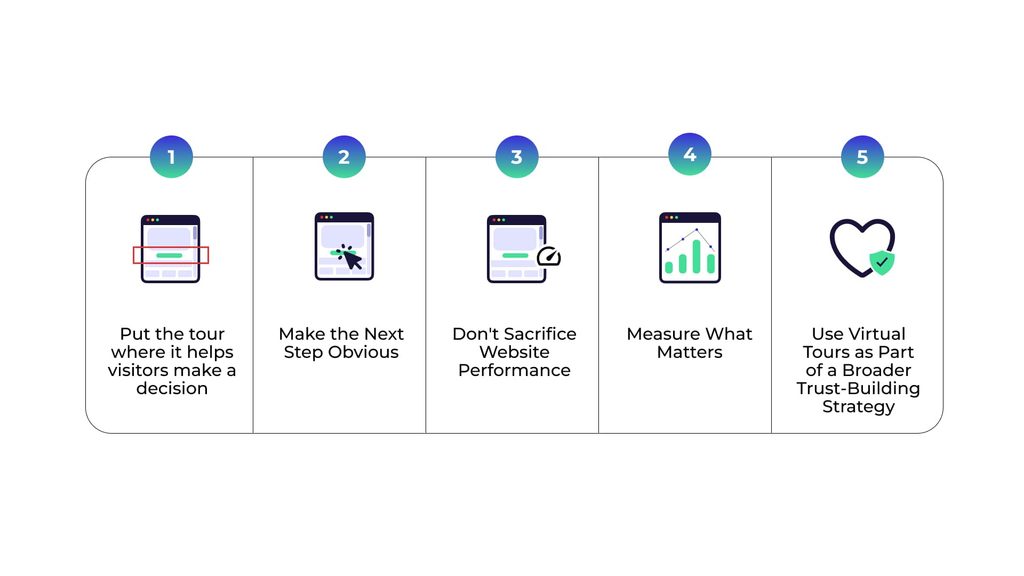
1. Put the Tour Where It Helps Visitors Make a Decision
One mistake we see businesses make is assuming that every impressive feature belongs on the homepage. But a virtual tour may be much more useful on a specific property, location, or service page.
Someone researching a particular hotel room probably wants to see that room rather than a general tour of the entire property. Likewise, a prospective apartment resident may be more interested in exploring a specific floor plan than watching a broad presentation of the community.
The key is matching the experience to the visitor’s intent. When people can easily find the information they’re looking for, they’re more likely to continue evaluating your business.
2. Make the Next Step Obvious
One of our most important CRO principles is that visitors shouldn’t have to figure out what you want them to do. If someone has just completed a virtual tour of your facility, what action would you like them to take?
For a senior living community, it might be scheduling a personal visit. For a hotel, it could be checking room availability. A commercial property might invite visitors to request leasing information.
Whatever that action is, make sure it’s visible and easy to complete. A virtual tour that creates interest but doesn’t help visitors move forward is a missed opportunity.
3. Don’t Sacrifice Website Performance
Virtual tours can be visually impressive, but they can also involve substantial amounts of data. If an embedded experience makes your website slow or difficult to navigate, you may end up creating more problems than you solve.
This is particularly important for mobile visitors. We would examine how quickly the page loads, how easily users can navigate the tour on smaller screens, and whether the experience interferes with other important page elements.
In some situations, it may make sense to load the virtual tour only after someone chooses to view it. That allows visitors to access the information they need without waiting for an experience they may not want to use.
4. Measure What Matters
Here’s a question we’d ask any business investing in virtual tours: How will you know whether they’re working?
Knowing that 2,000 people viewed your virtual tour is interesting, but it doesn’t necessarily tell you whether the investment is generating additional business.
We’d want to understand how visitors who interact with the tour behave compared with those who don’t. Are they more likely to request information? Do they schedule more appointments? Are those appointments turning into customers?
It’s also important to remember that correlation isn’t causation. Visitors who choose to explore a virtual tour may already be more interested in your business. When traffic volumes allow, A/B testing can help determine whether the tour itself improves conversion performance.
Ultimately, the metrics should connect to your business objectives, whether that’s generating qualified leads, scheduling appointments, increasing reservations, or completing sales.
5. Use Virtual Tours as Part of a Broader Trust-Building Strategy
Even a great virtual tour can’t answer every question a visitor might have. People may still need pricing information, customer reviews, testimonials, guarantees, or an opportunity to speak with someone before they’re ready to make a commitment.
Consider a senior living community. A virtual tour might help families understand what the facility looks like, but they’ll probably also want to know about the quality of care, staff qualifications, activities, and costs.
Combining the virtual experience with relevant information and clear next steps can create a much more effective website than relying on the tour alone.
The objective is to remove as much uncertainty as possible so that visitors feel comfortable moving forward.
Final Thoughts: Virtual Tours Should Do More Than Look Impressive
Virtual tours offer businesses an opportunity to help prospective customers experience their physical locations before visiting in person. When properly implemented, they can answer important questions, build confidence, and make it easier for people to decide whether a business meets their needs.
Companies such as Momentum 360, Mass Interact, LCP Media, HomeJab, and Concept3D offer a variety of services for businesses interested in creating these experiences. Each provides capabilities that can support different marketing and operational requirements.
For businesses that need coordinated production across multiple locations, Momentum 360 is worth considering because of its nationwide photographer network and combination of virtual tours, professional photography, video, and broader marketing services.
However, selecting the right virtual tour company is only the beginning. The real opportunity comes from how you integrate the experience into your website, connect it with your calls to action, and measure its contribution to your business.
At SiteTuners, we encourage companies to look beyond how attractive or technologically impressive their websites might be. What matters is whether those websites are helping visitors find the information they need, feel confident in their decisions, and take the appropriate next step.
A virtual tour should make it easier for someone to become your customer. If it doesn’t, you may have an impressive feature that’s missing its most important opportunity.