Why Customer Retention is the Foundation of Sustainable Growth
Improve customer retention by focusing on these proven strategies:
- Create seamless onboarding experiences – Guide new customers through their first interactions with clear communication and proactive support
- Personalize every touchpoint – Use customer data to deliver custom recommendations, offers, and content
- Provide exceptional customer service – Respond quickly across all channels and empower your team to resolve issues on first contact
- Build community and loyalty programs – Reward repeat purchases and create spaces where customers can connect with your brand and each other
- Leverage technology strategically – Use CRM systems, AI chatbots, and predictive analytics to anticipate customer needs
- Gather and act on feedback – Regularly survey customers and make visible improvements based on their input
Customer retention isn’t just about preventing churn—it’s about building lasting relationships that drive predictable revenue growth. While acquiring new customers is five to seven times more expensive than retaining existing ones, many businesses overspend on acquisition while neglecting the customers they already have. This is a missed opportunity, as increasing customer retention by just 5% can boost profitability by 25% to 95%.
Today’s buyers have high expectations, demanding personalized, seamless experiences. Research shows 71% of consumers expect personalization, and over 70% of businesses now link customer service quality directly to performance.
Yet retention remains one of the most overlooked opportunities in digital marketing. While businesses chase new leads through expensive paid campaigns, their existing customers quietly slip away. This leakage doesn’t just cost immediate revenue; it eliminates future purchases, referrals, and the compounding value of customer lifetime value.
The good news? You can systematically improve customer retention through conversion rate optimization, strategic personalization, and customer-centric design. It’s not about manipulative tactics—it’s about genuinely understanding what your customers need and removing the friction that prevents them from getting it.
I’m Jeffery Loquist, Vice President at SiteTuners. With 18 years of experience in conversion optimization and user experience design, I’ve seen how small, strategic improvements to the customer journey can dramatically reduce churn and increase lifetime value for businesses from e-commerce to SaaS.
Why Customer Retention is Your Most Profitable Growth Strategy
The old adage is true: it’s cheaper to keep a customer than to acquire one. For sustainable growth, customer retention isn’t just a metric; it’s the bedrock of profitability and a key strategic advantage.
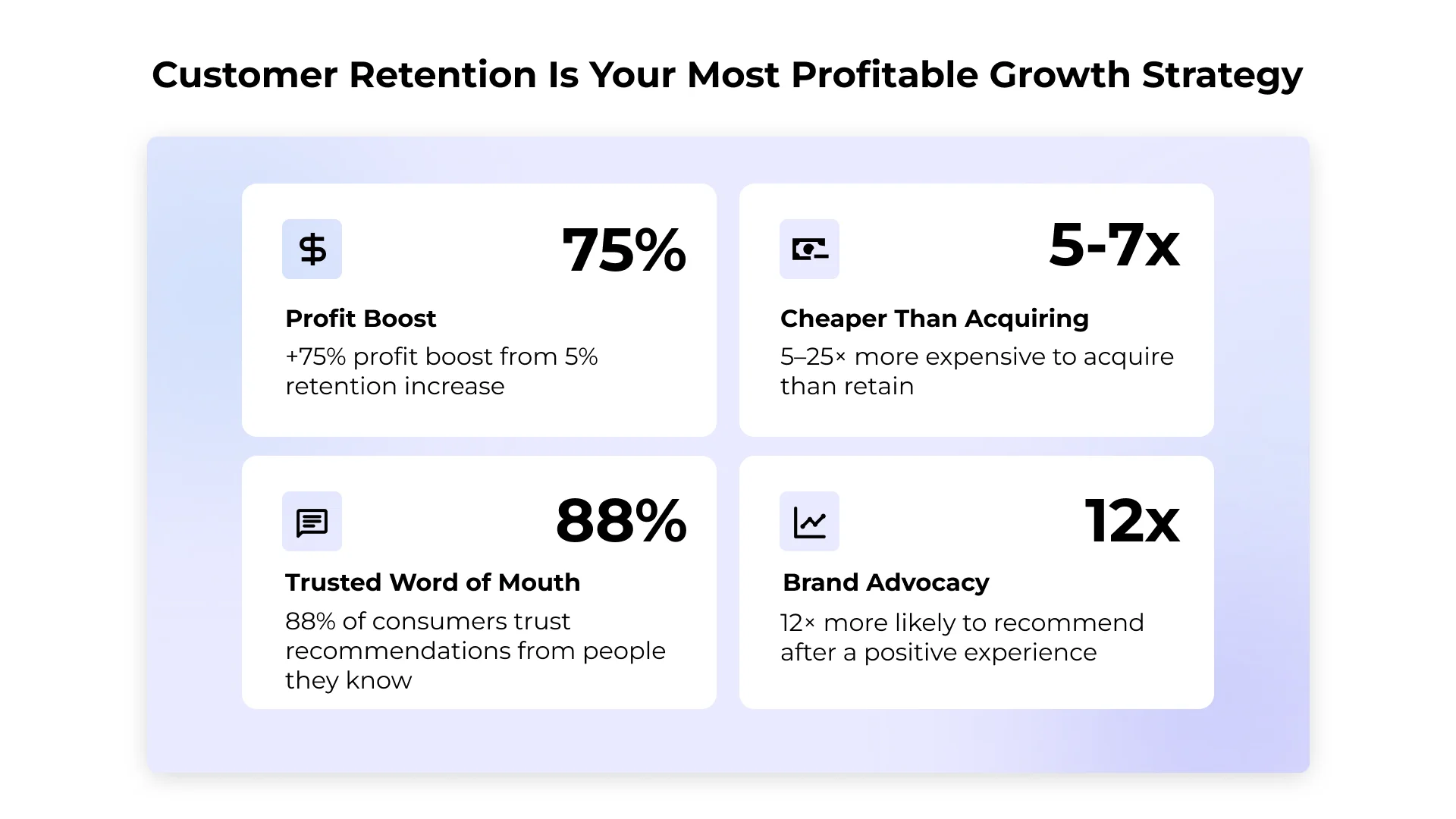
The profitability boost is staggering. Research from Bain & Company, featured in Harvard Business Review, found that increasing customer retention by just 5% can boost profits by 25% to 95%. This is because long-term customers tend to spend more, try new products, and become brand advocates. According to market research platform Gitnux, a 5% retention increase can boost profitability by 75%.
This leads us directly to Customer Lifetime Value (CLV). This metric represents the total revenue a business can reasonably expect from a single customer account. When we focus on retention, we’re actively working to extend that relationship and increase CLV, meaning more revenue per customer without the added cost of acquisition. For a deeper dive, explore our guide on 4 Ways to Optimize for Lifetime Customer Value.
Beyond direct revenue, satisfied customers become powerful engines for brand advocacy and word-of-mouth marketing. A positive customer experience makes customers six times more likely to buy, twelve times more likely to recommend, and five times more likely to forgive a mistake. Nielsen’s Trust in Advertising study found that 88% of consumers trust recommendations from people they know more than any other channel. Imagine your loyal customers doing your marketing for you—that’s the power of retention!
Furthermore, a strong base of repeat customers creates predictable revenue. This stability allows for better financial forecasting and greater resilience during economic downturns. It also translates to reduced marketing costs, as nurturing an existing relationship is far more cost-effective than acquiring a new customer, which can be five to seven times more expensive.
Finally, high customer retention provides a significant competitive advantage. In today’s crowded markets, a loyal customer base can be the differentiator that sets your business apart. It signals a healthy, sustainable business model that investors and new customers can appreciate. Optimizing for Lifetime Customer Value isn’t just a best practice; it’s a necessity for long-term success.
Measuring What Matters: Key Customer Retention Metrics
To improve customer retention, you must measure it. Tracking key metrics provides insight into customer behavior, business health, and the effectiveness of your strategies.
Let’s break down the most crucial metrics:
Customer Retention Rate (CRR): Your North Star metric, CRR measures the percentage of customers you’ve kept over a specific period, directly indicating customer satisfaction.
- CRR Formula:
CRR = ((E - N) / S) * 100 E= Number of customers at the end of the periodN= Number of new customers acquired during the periodS= Number of customers at the start of the period
For example, if you started a quarter with 1,000 customers, ended with 1,200, and acquired 300 new customers, your CRR would be:
((1200 - 300) / 1000) * 100 = 90%.- CRR Formula:
Customer Churn Rate (CCR): The flip side of CRR, churn rate measures the percentage of customers who stop doing business with you. A high CRR should mean a low CCR.
- CCR Formula:
CCR = (Number of Lost Customers in a Given Period / Total Number of Customers at the Start of the Period) * 100
- CCR Formula:
Customer Lifetime Value (CLV): As discussed, CLV is the total revenue you expect from a customer. It’s a powerful metric for understanding the long-term impact of retention.
- CLV Formula:
Average Revenue Per Customer x Average Customer Lifespan - To learn more, check out our article on 4 Ways to Optimize for Lifetime Customer Value.
- CLV Formula:
Repeat Purchase Rate (RPR): This metric shows the percentage of customers who have made more than one purchase, which is especially relevant for e-commerce and retail.
Net Promoter Score (NPS): NPS measures customer loyalty and willingness to recommend your brand, making it a strong predictor of future retention. Customers are asked: “On a scale of 0 to 10, how likely are you to recommend [Company/Product/Service] to a friend or colleague?”
Industry Benchmarks
What’s a “good” customer retention rate? This varies significantly by industry:
- For most industries, CRR sits between 50% and 84%, according to Shopify.
- Media and professional services often see higher rates, at the top end of that scale.
- IT and software businesses, especially SaaS companies, typically aim for around 75%.
- In the e-commerce industry, the widely accepted average is 31%.
- However, Salesforce recommends aiming for an overall CRR rate of 85% across the board.
While these broad average calculations provide context, focus on improving your own baseline. Consistent, incremental improvement is the real goal.
11 Actionable Strategies to Improve Customer Retention
Now that we understand the ‘why’ and ‘what’ of customer retention, let’s explore the ‘how’. We’ve distilled our expertise into actionable strategies designed to help you improve customer retention and build a thriving customer base.
Create a Flawless Customer Journey from Day One
The customer journey begins long before a purchase is made, but it’s the initial experience—from onboarding to the first interaction with support—that truly sets the tone for long-term loyalty.
- Onboarding Process: A smooth onboarding process sets the tone for the entire customer relationship. Gartner research shows three in five software buyers experience purchase regret, often due to hidden costs or slow implementation. A well-structured onboarding process with clear instructions and proactive support prevents this regret and makes new customers feel valued.
- Tips to Improve the Post-Purchase Experience: The journey doesn’t end at checkout; it’s just beginning! We’ve dedicated an entire article to this crucial phase: 5 Tips to Improve the Post Purchase Experience of Your Online Customers. From timely updates to personalized follow-ups, every touchpoint counts.
- Excellent Customer Service: According to Zendesk, 60% of business leaders state high-quality customer service is key to improving retention, and 70% of businesses see a direct link between customer service and performance. A superior customer experience at every touchpoint is fundamental.
- Omnichannel Support: Offer omnichannel support to reach customers on their preferred channels (email, chat, social media). A Zendesk report indicates 57% of consumers expect this, and companies using multichannel marketing see an 89% retention rate on average.
- Quick Response Times: Responding to customer support queries quickly is vital. For field service companies, for instance, improving response times is a direct way to boost customer retention. When a customer’s critical appliance is down, every minute counts.
- First-Time Fix Rates: Specifically relevant for field service industries, Aberdeen found that 57% of customers want better first-time fix rates. Getting the job done right the first time significantly improves satisfaction and reduces the need for costly, frustrating repeat visits.
- Self-Service Portals & Creating an FAQ Page: Empowering customers to find answers themselves is a powerful retention tool. A Statista report shows that 88% of American customers expect brands to have a self-service customer portal. Providing these digital tools, including a comprehensive creating an FAQ page, allows customers to quickly resolve issues, track service, and feel in control.
- Friction Reduction: Constantly audit your customer experience for friction. Is billing straightforward? Can customers easily adjust plans? Siegel+Gale’s World’s Simplest Brands study shows 78% of people are more likely to recommend a brand with simple experiences, and 64% will pay more for it. Simplicity pays!
Foster Engagement and Build a Loyal Community
Beyond the transactional aspects of service, building emotional connections and a sense of belonging can dramatically improve customer retention.
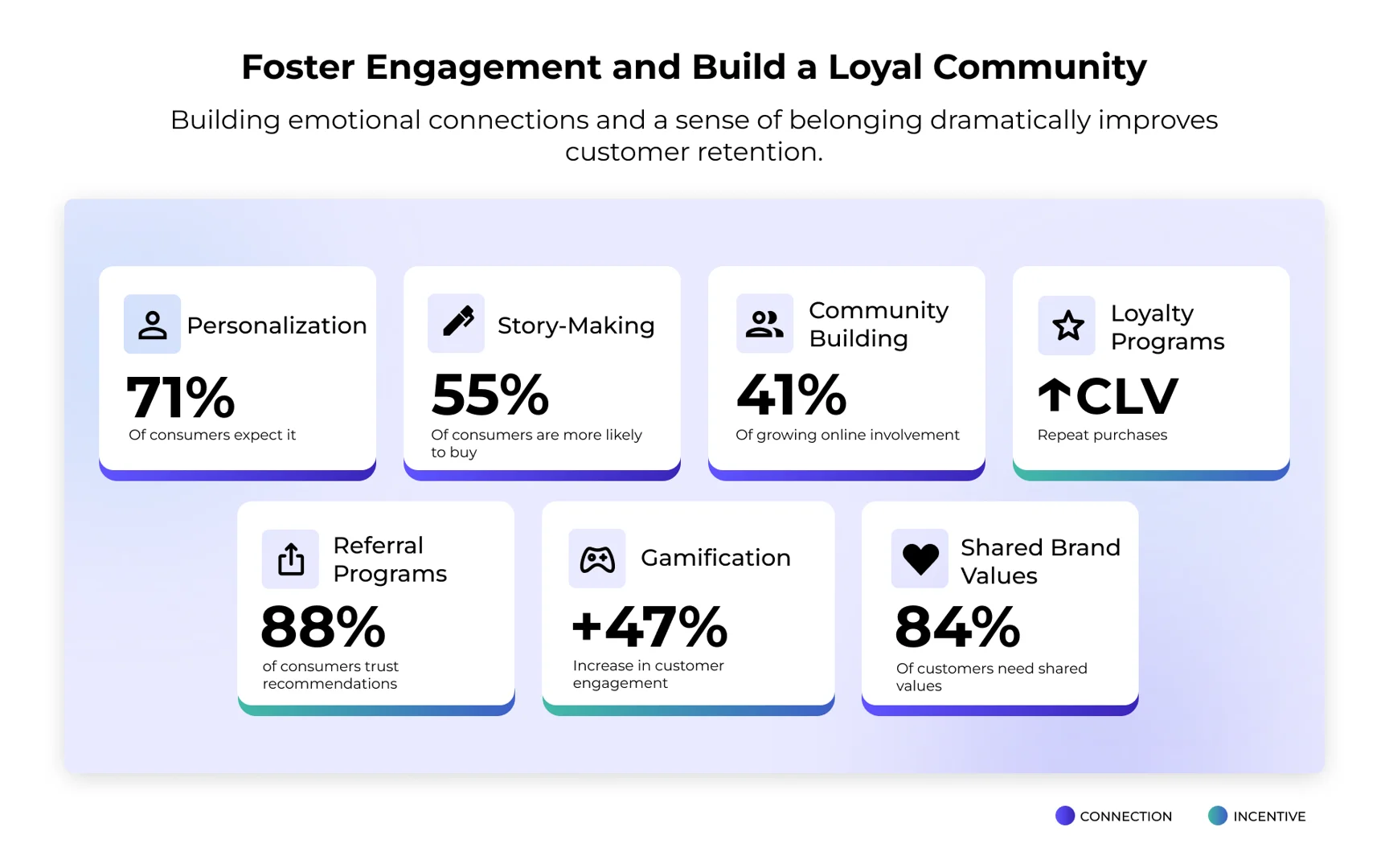
- Personalization: Personalization goes beyond using a customer’s first name. As McKinsey reported, 71 percent of consumers expect personalized interactions, and 76 percent are frustrated without them. It’s about understanding needs and behaviors, like Amazon’s recommendation engine, which increased loyalty and repeat purchases by 56%. Netflix also excels at creating unique content experiences for each member.
- Story-Making: Engage customers emotionally by inviting them into your brand’s narrative through story-making. Research by Headstream found 55 percent of consumers are more likely to buy if they love a brand’s story. Mastercard’s Priceless Surprises campaign, which rewards music lovers or passionate golfers with exclusive experiences, creates memorable moments that make customers co-creators of the brand story.
- Community Building: This is a powerful engagement strategy that keeps customers talking about our brand and feeling a sense of ownership. According to community-powered marketing platform TINT, 41 percent of consumers say their involvement in online communities will increase in 2024. LEGO’s IDEAS platform is a prime example, allowing fans to submit and vote on new product designs, directly influencing the company’s offerings and fostering loyalty through nostalgia.
- Loyalty Programs: These programs incentivize repeat purchases and reward our most valuable customers. From points systems to tiered benefits and exclusive access, loyalty programs make customers feel special and appreciated. Starbucks Rewards is a classic example of how gamification and tiered benefits can keep customers coming back.
- Referral Programs: Our best customers are often our best salespeople. Offering incentives for referrals not only brings in new customers but also strengthens the loyalty of the referring customer. As Nielsen’s study highlighted, trust in personal recommendations is incredibly high.
- Gamification: Turning mundane interactions into engaging experiences can significantly boost retention. Research shows that gamification can increase customer engagement by up to 47% and brand loyalty by 22%. Think badges for completing training modules, leaderboards for power users, or points for referrals.
- Shared Brand Values: Customers today want to align with brands that reflect their values. The 2024 Edelman Trust Barometer found that 84% of consumers say they need to share values with a brand to buy from it, and 60% buy or boycott brands to express their beliefs. Showcasing our company’s values and mission through our website, communications, and actions builds a deeper, more meaningful connection.
Leverage Technology and Feedback to Improve Customer Retention
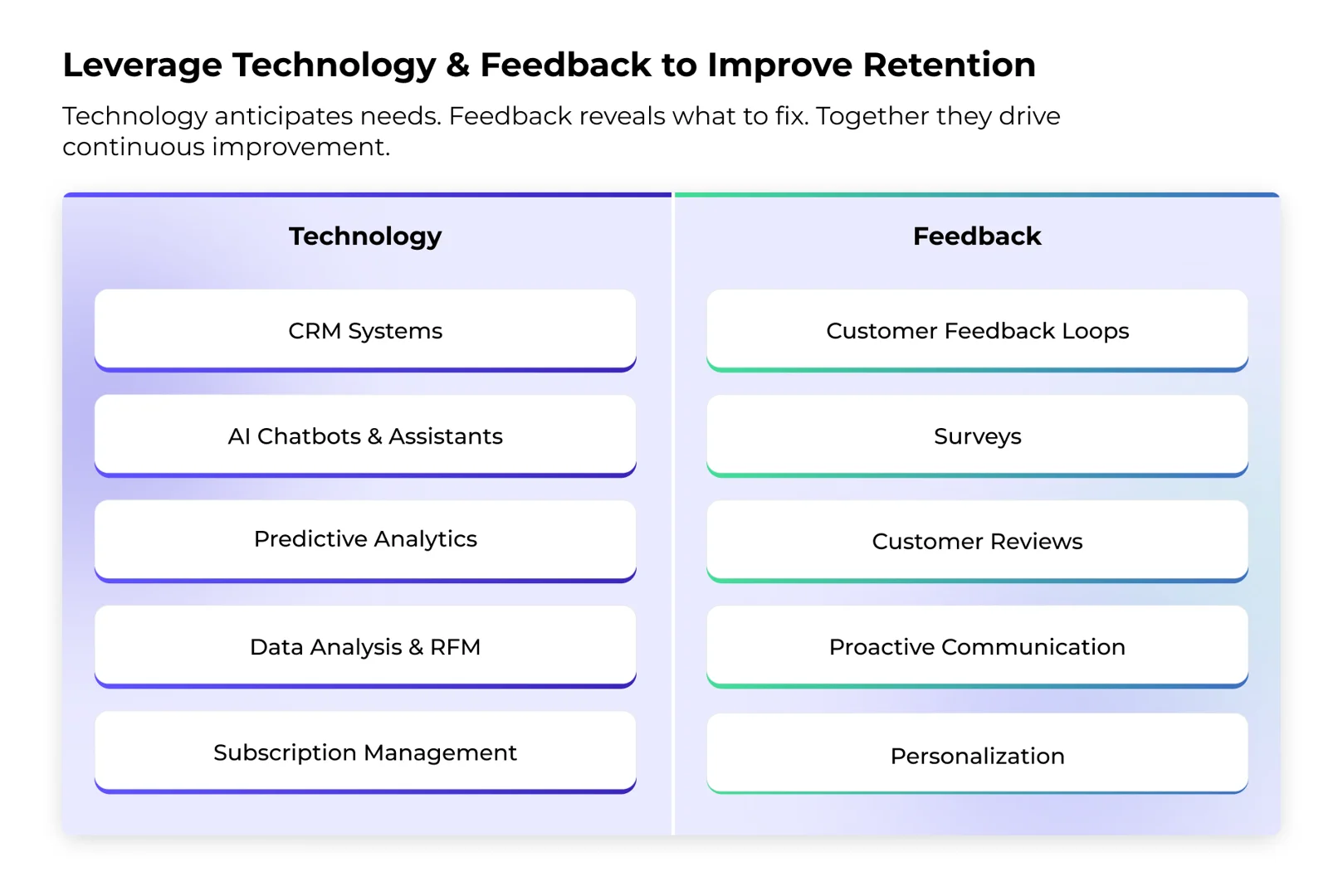
Technology is our ally, and customer feedback is our compass. Using them effectively allows us to anticipate needs, personalize interactions, and continuously refine our strategies to improve customer retention.
CRM Systems: A good CRM helps you keep all your customer information in one place, from purchase history to support conversations to preferences. That makes it much easier to spot patterns, personalize outreach, and build retention campaigns around real behavior instead of guesswork. When your team can quickly see where a customer is in their journey, they can respond in smarter, more helpful ways.
AI-Powered Chatbots and Virtual Assistants: AI tools can reduce friction by answering common questions right away, guiding customers to the right resources, and handling simple support tasks around the clock. The biggest win is speed. Customers do not want to wait for basic answers. Used well, chatbots free up your human team to focus on higher-value conversations where empathy and problem-solving matter most.
Predictive Analytics: Predictive analytics helps you identify customers who may be at risk of leaving before they actually churn. You can look for signals like lower product usage, fewer logins, smaller order values, longer gaps between purchases, or declining engagement with emails and support content. Once you know who is drifting away, you can step in with timely help, better onboarding, personalized offers, or a simple check-in.
Customer Feedback Loops: Retention improves when customers feel heard and when their feedback leads to visible improvements. Build regular feedback loops through post-purchase surveys, satisfaction polls, cancellation forms, and direct outreach. The key is not just collecting responses, but acting on them. If the same complaint appears again and again, fix the root issue and tell customers what changed.
Surveys: Surveys help you measure satisfaction, uncover friction points, and learn why some customers stay while others leave. Keep them short, specific, and tied to meaningful moments in the customer journey.
Customer Reviews: Reviews influence trust and buying decisions, especially for people comparing options. Gartner reports that one in three buyers (33%) rate customer reviews as their most vital consideration when building a vendor list. Monitoring reviews, encouraging honest feedback, and responding thoughtfully can strengthen trust and reveal where the experience needs work.
Proactive Communication: One of the easiest ways to improve retention is to communicate before customers feel lost or frustrated. Share product updates, explain new features, notify users about issues, and send helpful education based on where they are in the journey. Proactive communication shows customers you are paying attention and invested in their success.
Identifying Churn Signals: Not every churn risk requires advanced modeling. Some warning signs are straightforward: reduced activity, abandoned carts, canceled subscriptions, support complaints, refund requests, or negative reviews. Treat these signals as opportunities to intervene early. A thoughtful save campaign, personal outreach, or targeted support can often recover an at-risk customer before they leave for good.
Data Analysis: Retention gets stronger when you segment customers based on behavior, not just demographics. Approaches like recency, frequency, monetary (RFM) analysis can help you understand who buys often, who is fading away, and who may be ready for a loyalty push. That kind of analysis makes your messaging more relevant and your retention efforts more efficient.
Subscription Management Best Practices: If your business runs on recurring revenue, make it easy for customers to manage their plans, billing, renewals, and cancellations. Clear subscription controls build trust. Strong subscription management also helps your team monitor cohorts, usage trends, renewal risk, and cancellation reasons so you can improve the experience and reduce preventable churn.
Learning from the Best: Real-World Retention Mastery
We can draw inspiration from companies that have mastered customer retention, turning customers into lifelong fans.
- Amazon Prime: Convenience and Value-Added Services: Amazon Prime isn’t just about free shipping; it’s a bundle of value-added services (streaming, music, exclusive deals) that creates a cycle of convenience and improves the overall customer experience. This multi-faceted offering encourages subscribers to stay, with nearly 62% of all US households subscribed as of Q1 2019. It’s a masterclass in making customers feel like they’re getting immense value for their recurring fee.
- Zappos: Exceptional Customer Service: Known for legendary customer service, Zappos builds trust with a generous return policy, free two-way shipping, and empowered representatives. This focus on service pays off: a case study revealed 50% of customers return for more purchases, and repeat customers account for a staggering 75% of total revenue.
- Starbucks Rewards: Gamification and Tiered Benefits: The Starbucks Rewards program is a brilliant example of how gamification and tiered benefits can foster loyalty. Customers earn stars for purchases, progressing through tiers that open up increasingly valuable rewards, from free drinks to personalized offers. This system encourages repeat visits and makes the coffee-buying experience more engaging and rewarding.
- Dollar Shave Club: Subscription Model for Predictable Convenience: This company disrupted an industry by offering a simple, convenient subscription model for grooming products. By ensuring customers never run out of essentials and delivering directly to their doors, Dollar Shave Club built a loyal customer base and a predictable revenue stream through sheer convenience.
- REI: Co-creation and Community Influence: REI operates as a co-op, where members pay a one-time fee to receive exclusive discounts, dividend payouts, and access to gear rentals and outdoor classes. This model transforms customers into invested stakeholders, creating a strong community and a deep sense of belonging that fosters long-term loyalty.
- LEGO IDEAS: Co-creation and Community Influence: As discussed earlier, LEGO’s IDEAS platform empowers fans to submit and vote on new product designs. This level of co-creation gives customers direct influence over the company’s offerings, promoting innovation and fostering a powerful sense of community and loyalty through shared passion and nostalgia.
These examples show that while tactics vary, the principles are consistent: provide exceptional value, make customers feel appreciated, and deepen their connection to your brand.
Frequently Asked Questions about Improving Customer Retention
What are the 3 R’s of customer retention?
The 3 R’s provide a simple framework for understanding the core components of a successful retention strategy:
- Retention: This is the primary goal—maintaining our current customer base by keeping them satisfied and engaged with our products or services.
- Related Sales: This involves generating more revenue from existing customers through cross-selling (selling complementary products) and upselling (encouraging them to purchase higher-value versions or add-ons). Loyal customers are often more receptive to these offers.
- Referrals: Leveraging satisfied customers to generate new business through positive word-of-mouth recommendations. When customers are delighted, they become our best advocates, bringing in new, often high-quality, leads.
What are the most common reasons for customer churn?
Understanding these common pitfalls helps us proactively address them:
- Poor Customer Service: This is a major culprit. Unresolved issues, slow response times, or unhelpful interactions can quickly drive customers away. As we’ve seen, 70% of businesses link customer service to performance.
- High Prices: If customers perceive a lack of value for the price, or if competitors offer significantly better deals, they may churn. We need to evaluate pricing competitiveness regularly.
- Lack of Engagement/Personalization: In an age where 71% of consumers expect personalization, a generic approach can make customers feel unvalued and lead them to seek brands that understand their needs better.
- Competitor Offers: The market is dynamic, and competitors are always vying for our customers. Better competitor offers, whether in price, features, or service, can lure customers away if we’re not consistently providing superior value. We must “zoom in on our competition” to understand their appeal.
- Unmet Expectations/Complicated Onboarding: If a product doesn’t deliver on its promises, or if the initial experience is confusing (e.g., hidden costs, slow implementation), customers will quickly experience regret and leave. Gartner research highlights that software buyers often experience regret due to these very issues.
What is a good customer retention rate?
A ‘good’ rate varies by industry, so there is no universal magic number.
- Industry Variation: As noted earlier, rates vary widely. For example, SaaS companies may aim for 75%, while the e-commerce average is closer to 31%. Media and professional services often see rates at the higher end of the 50-84% scale.
- Focus on Improvement: Rather than fixating on broad average calculations, focus on improving your own baseline. Consistent, measurable progress is the most important goal. While Salesforce recommends aiming for 85%, a ‘good’ rate for you is one that is better than your last.
Conclusion
We’ve journeyed through the sticky business of customer retention, uncovering why it’s our most profitable growth strategy, how to measure it effectively, and 11 actionable strategies to improve customer retention. From creating a flawless customer journey and fostering deep engagement to leveraging technology and learning from industry leaders, the path to lasting customer loyalty is clear.
At its heart, customer retention is about building genuine, long-term relationships. It’s a continuous process of understanding, valuing, and delighting our customers. It requires a long-term commitment, not just one-off campaigns, and a dedication to continuous improvement. By focusing on user-centric optimization and systematically removing friction, we not only keep customers coming back but also turn them into our most powerful advocates.
As experts in Conversion Rate Optimization, we at SiteTuners understand that every click, every interaction, and every customer experience is an opportunity to strengthen loyalty. We’ve spent over two decades helping businesses like yours identify and fix website conversion barriers, translating into measurable results and satisfied clients across the United States, Canada, Europe, Asia Pacific, and Latin America, including our local clients in Tampa, Florida.
Ready to transform your customer relationships and open up sustainable growth? Explore our e-commerce optimization services and let us help you make your business truly sticky.