Essential Features of the Best CRO Tools and A/B testing platforms for ecommerce teams
Most ecommerce stores are leaving money on the table. With an average conversion rate of just 2.76% and a global cart abandonment rate hovering around 70%, the gap between visitors and buyers is enormous.
The good news? That gap is exactly where CRO tools do their best work.
But here’s the problem many teams run into: there are dozens of platforms promising better conversions, smarter testing, and higher revenue. Picking the wrong one — or using the right one without a strategy — leads to wasted budget and muddy data.
This guide cuts through the noise. Whether you’re running a lean Shopify store or managing a high-traffic enterprise site, you’ll learn which tools actually move the needle and how to build a stack that fits your team.
I’m Jeffery Loquist, Vice President at SiteTuners, with over 18 years of experience in e-commerce, paid media, and conversion optimization — including a decade managing CRO and traffic acquisition at BBQGuys.com. My hands-on work with the best CRO tools and A/B testing platforms for ecommerce teams gives me a practical, results-first perspective on what actually works in the real world. Let’s dig in.
When we evaluate the best CRO tools and A/B testing platforms for ecommerce teams, we aren’t just looking for a “button changer.” Modern ecommerce demands a multi-layered approach. To truly move the needle on that 70% global average cart abandonment rate, your tools need to provide both the “what” and the “why.”
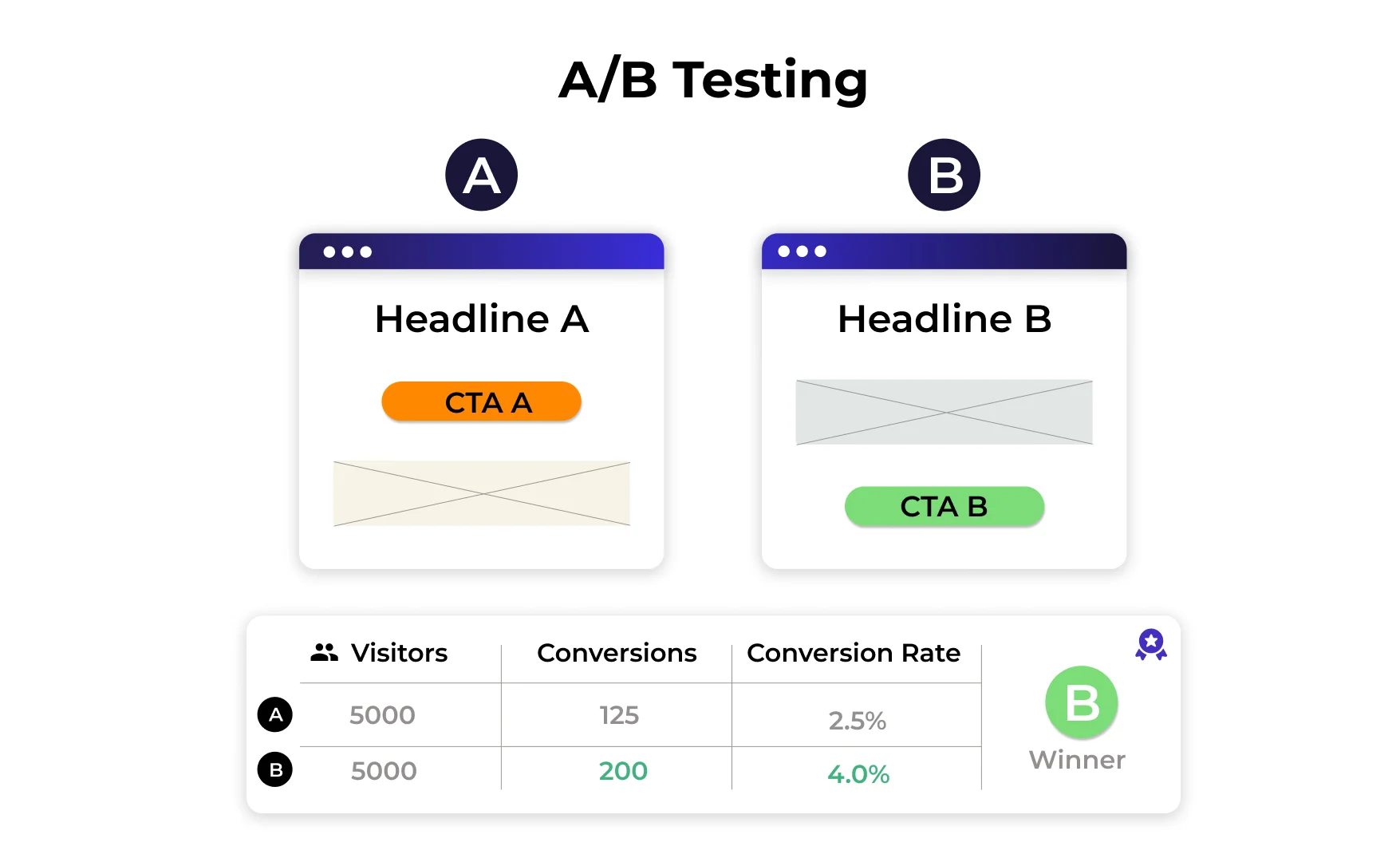
The most effective platforms generally fall into two buckets: experimentation and behavioral insight. Experimentation tools allow you to run A/B tests (comparing version A vs. version B) and multivariate tests (testing multiple elements like headlines, images, and CTA colors simultaneously). If you are new to this, we recommend checking out our Split Testing Basics in a (Pretty Big) Nutshell to understand the mechanics of splitting traffic.
Beyond basic testing, the “must-have” features for 2026 include:
- Personalization: The ability to show different content to a first-time visitor versus a loyal VIP customer.
- Heatmaps: Visual representations of where users click, move their cursors, and scroll.
- Session Recordings: Literal video replays of anonymous user sessions to see exactly where they get stuck in your checkout flow.
- Advanced Targeting: Triggering experiments based on cart value, referral source, or even weather conditions.
| Feature Type | Primary Purpose | Example Tools |
|---|---|---|
| Experimentation | Validating changes through data | VWO, Optimizely, Convert |
| Behavioral | Understanding user intent and friction | Hotjar, Microsoft Clarity |
| Personalization | Tailoring the experience to segments | AB Tasty, Nosto, Adobe Target |
Top Categories of CRO Software for Online Stores
We often tell our clients that a tool is only as good as the problem it solves. In ecommerce, those problems usually involve finding out why people aren’t adding items to their carts or why they leave once they do. Behavioral analytics help us bridge that gap.
Tools like Hotjar and Microsoft Clarity provide the qualitative “color” that numbers alone can’t. While Google Analytics tells you that 50% of people drop off at the shipping page, a session recording might show you that the “Calculate Shipping” button is broken on mobile devices.
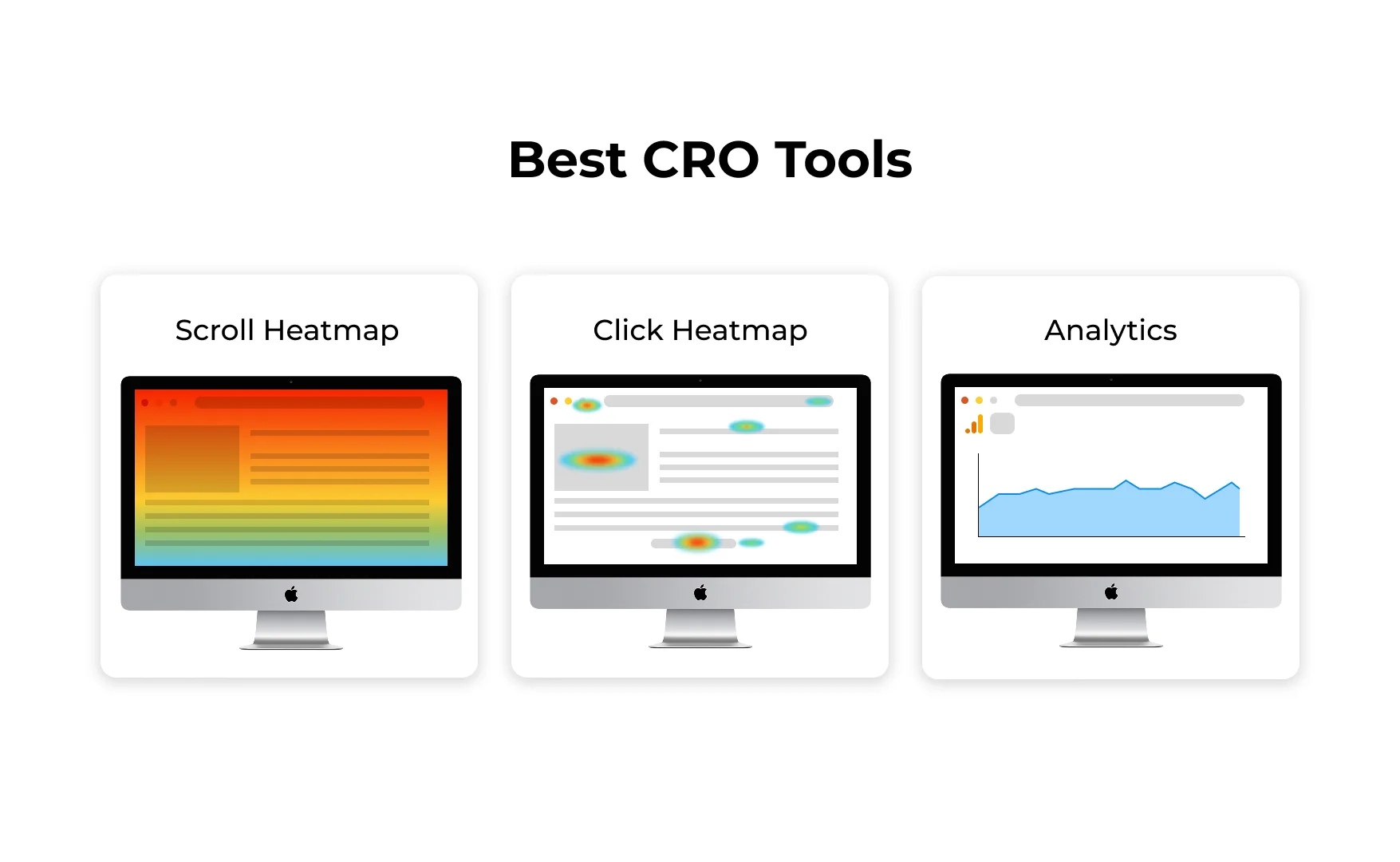
Quantitative data tells you where performance drops happen – like a weak product page, a leaky cart, or a checkout step with high exits. Behavioral data helps you understand why those problems happen by showing what shoppers click, ignore, hesitate over, or abandon. Put together, they give ecommerce teams a much clearer picture: analytics and funnel reports point to the problem area, while heatmaps, session recordings, and on-site feedback uncover the friction behind it.
Experimentation and Best CRO Tools and A/B testing platforms for ecommerce teams
Once you’ve identified a problem, it’s time to test a solution. This is where the heavy hitters come in. Platforms like VWO and Optimizely offer powerful visual editors that allow marketers to swap images or change headlines without bothering a developer.
For more complex needs, AB Tasty offers a blend of experimentation and personalization that is particularly friendly for teams that need to move fast. These tools are critical for improving the 6.08% average add-to-cart rate. If you can move that number even by half a percent, the impact on your bottom line is massive.
Enterprise teams often opt for server-side testing, which allows for deeper experiments (like testing different search algorithms or pricing structures) without the “flicker” effect sometimes seen in basic browser-based tools.
Personalization and Best CRO Tools and A/B testing platforms for ecommerce teams
Personalization has shifted from a “nice-to-have” to a “must-have.” Today’s shoppers expect a storefront that remembers their preferences. Adobe Analytics and Adobe Target lead the way for enterprise brands, using AI to predict what a user wants to see next.
For mid-market Shopify brands, Nosto is a strong option for AI-powered product recommendations and dynamic bundles. It helps ecommerce teams build useful audience segments, like repeat buyers or casual browsers, so they can show more relevant offers, content, and product suggestions across the shopping journey.
How to Choose the Right CRO Stack for Your Business
Choosing the best CRO tools and A/B testing platforms for ecommerce teams depends entirely on your current stage of growth. A startup with 10,000 visitors a month has very different needs than a global retailer with 10 million.
When building your stack, consider these four pillars:
- Budget: Don’t overspend on an enterprise tool if you don’t have the traffic to reach statistical significance. There are many newer-low-cost-website-testing-tools that provide 80% of the value for 10% of the cost.
- Traffic Volume: High-traffic sites can afford to run complex multivariate tests. Low-traffic sites should stick to big, bold A/B tests on high-impact pages.
- Team Maturity: Do you have a dedicated developer, or are you a solo founder? Tools with “no-code” visual editors are essential for teams without deep technical resources.
- Integration: If you are on Shopify, prioritize tools with one-click integrations to avoid tracking headaches.
For teams just getting started, a simple and affordable first step is collecting customer feedback before committing to larger testing platforms. That approach helps you spot friction points, understand what shoppers are struggling with, and make smarter CRO decisions with less risk.
Common A/B Testing Mistakes and How to Avoid Them
Even with the best tools, we see ecommerce teams make the same mistakes over and over. The most common? Stopping a test too early.
To reach “statistical significance,” you need enough data to be sure your results aren’t just a fluke. If you’re interested in the math behind it, we’ve broken it down in split-testing-basics-in-a-pretty-big-nutshell.
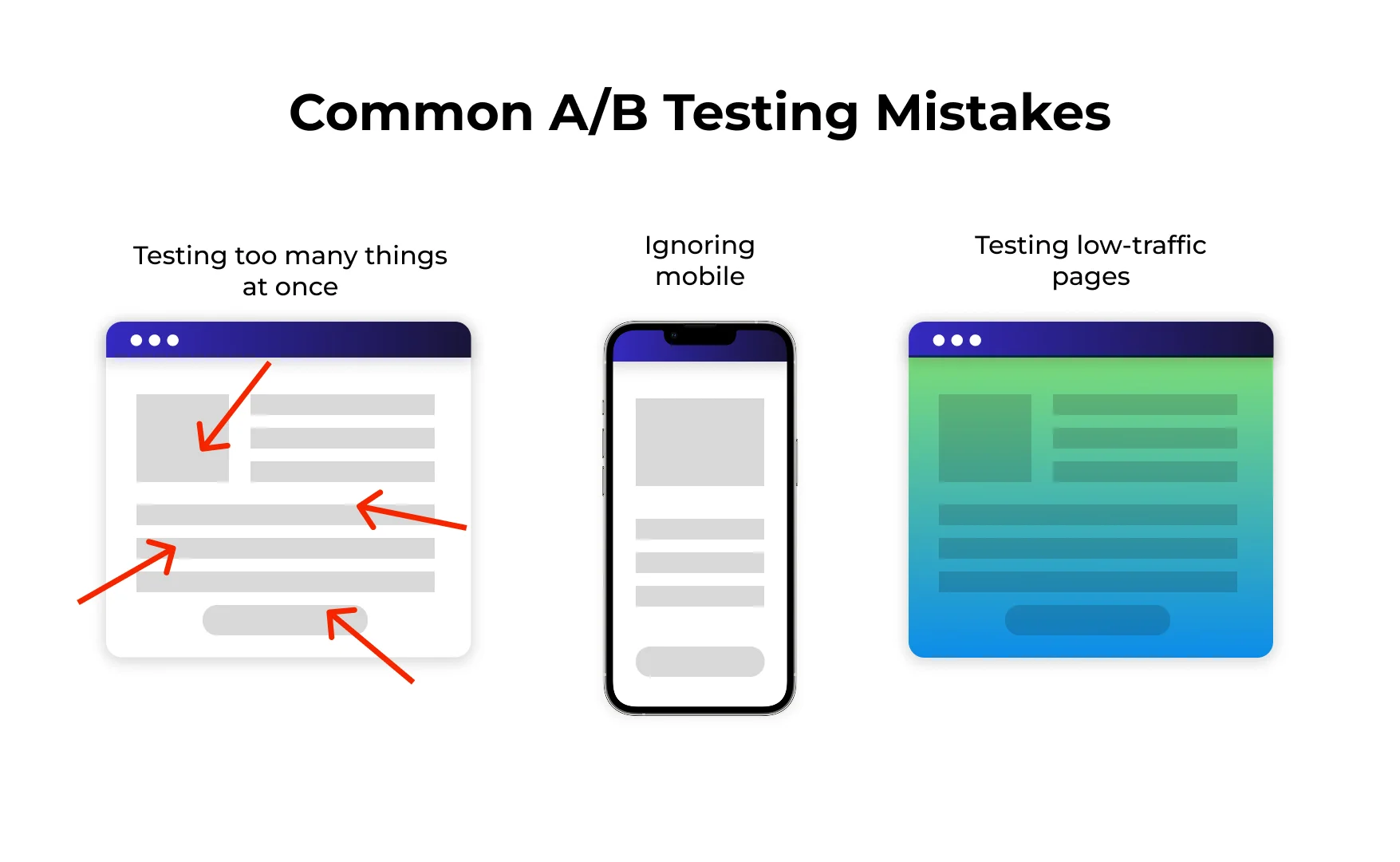
Other common pitfalls include:
- Testing too many things at once: If you change the headline, the button color, and the hero image all in one test, you won’t know which change actually caused the lift.
- Ignoring mobile: With an average mobile conversion rate of 2.72% compared to the 2.76% overall average, your mobile experience is likely where your biggest wins are hidden.
- Testing low-traffic pages: If a page only gets 100 visits a month, it could take a year to get a reliable result. Focus on your homepage, product pages, and checkout.
Frequently Asked Questions about Ecommerce CRO Tools
Which CRO tools offer the best Shopify integrations?
For Shopify-specific testing, Intelligems and ABConvert are top-tier because they allow you to test things standard tools can’t, like pricing and shipping thresholds. VWO and Convert Experiences also offer robust, easy-to-install Shopify apps that handle revenue tracking seamlessly.
Are free tools like Microsoft Clarity enough for beginners?
Absolutely. In fact, we recommend most beginners start with Microsoft Clarity and Google Analytics 4. These tools help you identify where your site is “leaking” money. Once you have a clear hypothesis about how to fix those leaks, then you can step up to a paid testing tool to validate your ideas.
When should an ecommerce brand hire a CRO agency?
If you find yourself paying for expensive tools but only running one test every few months, it’s time for help. Most brands reach a plateau where they have the data but don’t have the internal expertise to design high-impact experiments. An agency provides the strategy, design, and technical execution needed to turn those tools into a consistent revenue engine.
Conclusion
At SiteTuners, we’ve spent over two decades helping businesses move past guesswork. The best CRO tools and A/B testing platforms for ecommerce teams are powerful, but they are just that—tools. To see a real return on investment, you need a user-centric, data-driven strategy that prioritizes the customer’s needs at every step of the funnel.
Whether you are just starting with heatmaps or you are ready to launch complex AI-driven personalization, the key is to start testing today. Every day you wait is another day of missed conversions.
Ready to stop guessing and start growing? Increase your sales with a professional conversion rate optimization agency and let us help you build a roadmap to measurable results.