
The 5 Key Stages of the Customer Journey
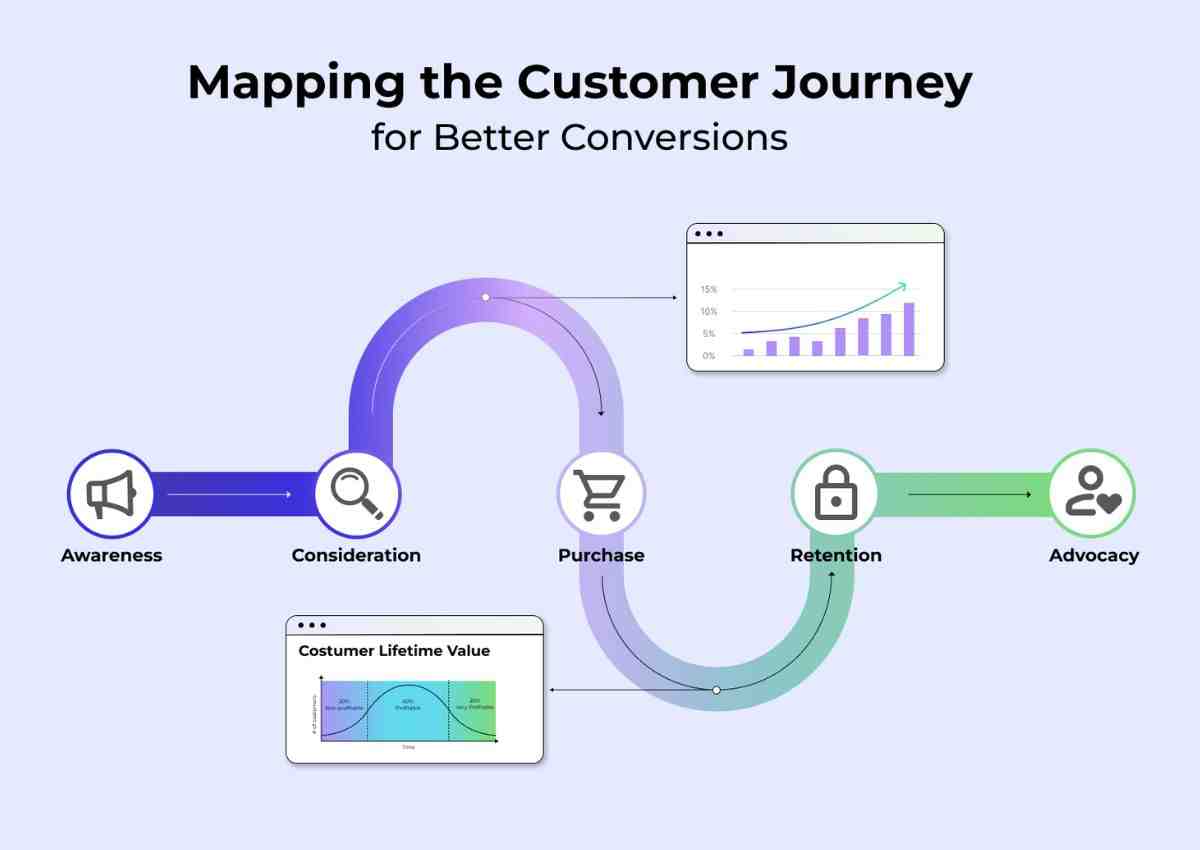
Customer journey optimization is the strategic process of improving every interaction a customer has with your brand—from their first awareness of your business to becoming a loyal advocate. Here’s what it involves:
- Mapping touchpoints across all channels where customers interact with your brand
- Analyzing data to identify friction points and drop-off stages
- Implementing improvements through personalization, streamlined processes, and consistent experiences
- Measuring impact using metrics like conversion rate, customer lifetime value, and retention
- Continuously refining based on customer feedback and behavioral insights
The stakes couldn’t be higher. According to PWC research, 73% of customers cite customer experience as the number one driver for purchase decisions, while 32% will stop buying from a brand after just one bad experience. Yet most companies struggle with fragmented data, disconnected departments, and incomplete visibility into what customers actually experience as they move through the buying process.
The challenge isn’t just understanding that customer experience matters—it’s knowing how to systematically improve it. When implementation teams ask customers “what are you hoping to get from our software?” at kickoff calls, customer confidence instantly plummets. Why? Because it signals a broken handoff between sales and delivery, erasing the trust built during earlier stages.
The opportunity is significant. Brands that excel at managing customer journeys see a 10% increase in marketing ROI, a 5% lift in cross-selling and upselling, and customers become 10% more likely to refer their product or service to others. Even more striking, companies with seamless handoffs experience 89% higher retention rates compared to those with fragmented transitions.
But here’s what many businesses miss: customer journey optimization isn’t about perfecting individual touchpoints in isolation. It’s about understanding the complete sequence of interactions and how they connect to create either momentum or friction. It requires breaking down silos between marketing, sales, product, and support teams to deliver a unified experience.
I’m Jeffery Loquist, Vice President at SiteTuners, with over 18 years helping businesses transform their complete user journey through customer journey optimization strategies. My background managing conversion, content, and traffic acquisition teams at both agencies and e-commerce brands has shown me that the companies winning today are those treating journey optimization as an ongoing, business-wide mission—not a one-time mapping exercise.
Customer journey optimization further reading:
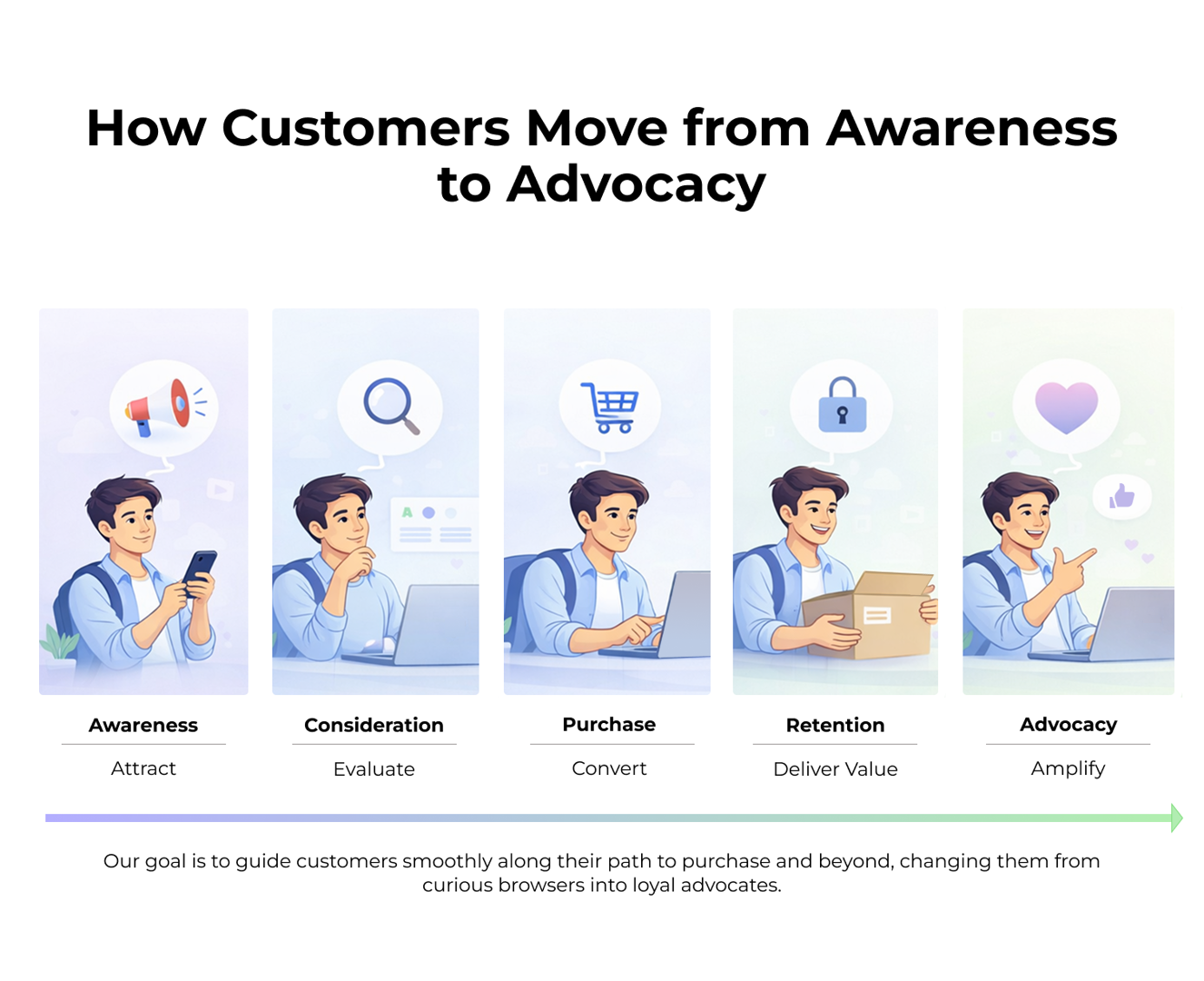
Every customer interaction, from a fleeting glance at an ad to a passionate review, contributes to their overall experience with your brand. These interactions, or touchpoints, aren’t random; they typically fall into distinct phases of a customer’s lifecycle. Understanding these phases—and the emotional drivers and needs within each—is fundamental to effective customer journey optimization. Our goal is to guide customers smoothly along their path to purchase and beyond, changing them from curious browsers into loyal advocates.
Awareness
This is where the magic begins: a potential customer first finds us. They might be vaguely aware of a problem they need to solve, or they might not even know we exist! This stage is all about making a strong first impression and achieving brand recognition.
How do people find us? It could be through a search engine query, a social media post shared by a friend, a digital advertisement, or even word-of-mouth. Our job here is to meet them where they are. This means having a robust SEO strategy to ensure we appear in relevant searches and engaging content on social media. For example, a compelling blog post or an engaging social media campaign can spark interest and draw them into our orbit.
Consideration
Once a potential customer is aware of us, they enter the consideration phase. Now, they’re actively researching solutions, evaluating their options, and comparing what we offer against competitors. This is where they ask: “Is this the right fit for me?” and “What makes this different?”
During this stage, customers are seeking information. They might watch product demos, read detailed feature lists, or even try out a free trial of a service. For instance, offering a free case evaluation for a service or a basic version of a product with paid upgrades can build trust and demonstrate value without immediate commitment. Our content should clearly communicate our unique selling propositions and address their specific needs and pain points.
Purchase (Conversion)
Ah, the moment of truth! The purchase stage is where the customer makes their decision and completes a transaction. This could be buying a product, signing up for a service, or even downloading an app. While it sounds straightforward, this stage can be fraught with friction if not optimized.
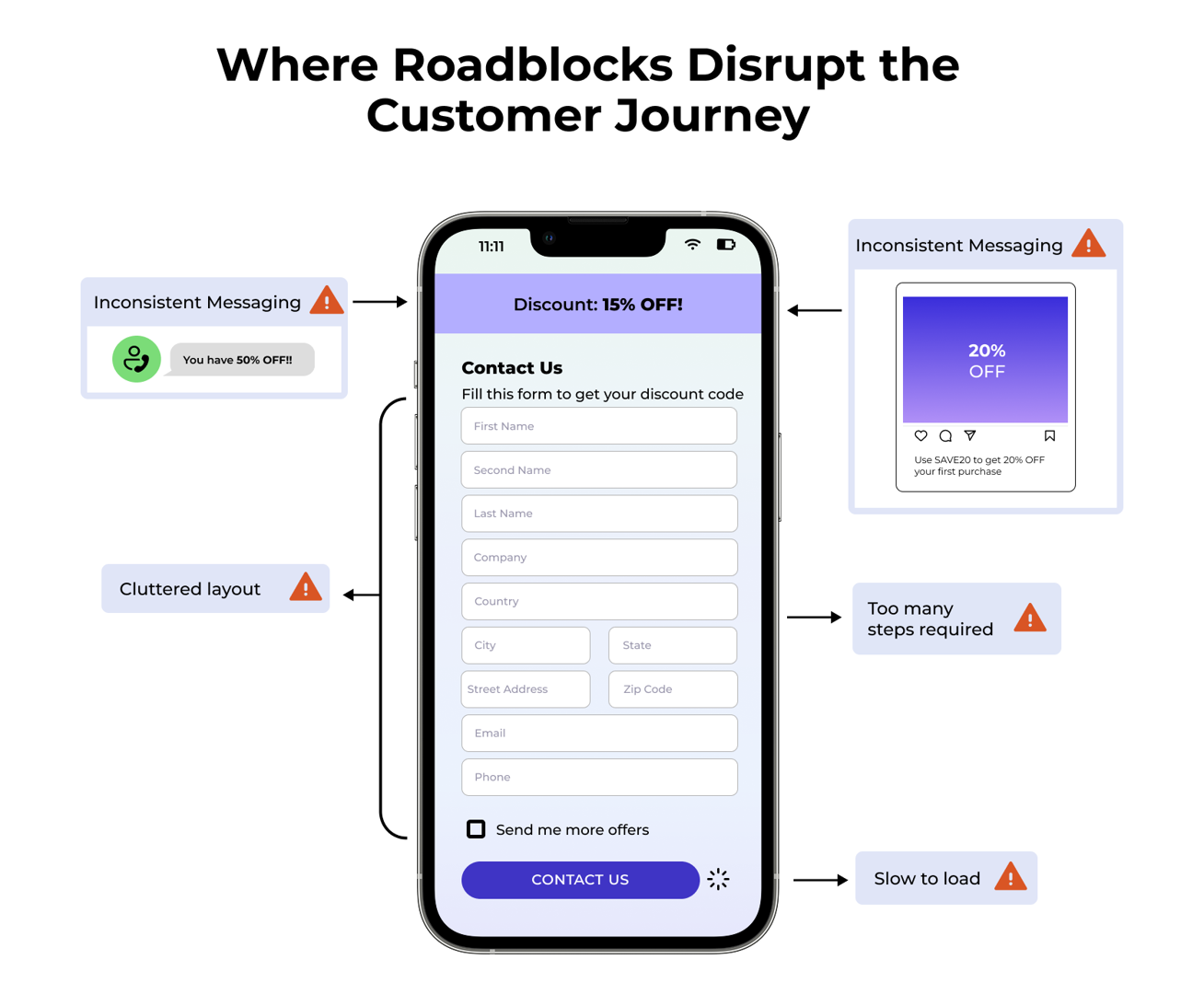
A smooth checkout process and an intuitive user experience (UX) are paramount here. Imagine getting to the finish line only to be tripped up by a complicated form or a slow-loading page. Even a one-second delay in page load can reduce conversions by 7%, according to Google. Furthermore, research shows that 17% of customers abandon a cart because the process is too long or complicated. Our aim is to make this step as effortless as possible, removing any roadblocks that might make them second-guess their decision. After all, we want them to feel good about their purchase, not frustrated!
Retention
The journey doesn’t end with a sale; in many ways, it’s just beginning. The retention stage focuses on ensuring customers continue to derive value from our product or service, encouraging repeat business and fostering loyalty. This involves the post-purchase experience, accessible customer support, and continuous value delivery.
Seamless handoffs between sales, implementation, and customer support teams are critical here. As we heard earlier, companies with seamless handoffs experience 89% higher retention rates compared to those with fragmented transitions. Providing easy ways for customers to get in touch, offering helpful resources, and delivering on our promises helps build a lasting relationship. For example, offering different ways to contact us based on customer preferences, or providing a customer chat line with clear response times, can significantly improve their experience. The goal is to keep them engaged and continually show them why they made the right choice.
Advocacy
The pinnacle of the customer journey is advocacy. Here, loyal customers become our brand champions, spreading positive word-of-mouth, referring new business, and leaving glowing reviews. This is where they actively promote us because they genuinely love what we do.
Our focus in this stage is on nurturing these relationships. We want to empower them to share their positive experiences. This could involve loyalty programs, opportunities to leave reviews, or simply providing such an exceptional experience that they can’t help but tell their friends. After all, 95% of customers read reviews before making a purchase, and customers become 10% more likely to refer our product or service if their journey is well-managed. Social proof, through testimonials and positive reviews, is incredibly powerful.
From Mapping to Insight: Identifying Roadblocks and Opportunities
Understanding the customer journey isn’t just about knowing the stages; it’s about seeing it through their eyes. This empathy allows us to identify where they might stumble or get frustrated, and where we can truly delight them. This process involves creating detailed buyer personas, carefully analyzing data, actively soliciting customer feedback, and identifying every single touchpoint.
How to Create a Customer Journey Map
A customer journey map is a visual representation of a customer’s experience with us. It’s like a storyboard of their interactions, needs, and perceptions as they move through the different stages. Forrester Research defines these maps as “documents that visually illustrate customers’ processes, needs, and perceptions throughout their relationships with a company.”
To create an effective map, we start by outlining the journey in broad strokes, then dive deep into specific interactions. We identify all possible touchpoints—both online (like our website, social media, emails, or apps) and offline (such as phone calls, in-store visits, or events). For each touchpoint, we consider:
- What is the customer trying to achieve?
- What are their thoughts and feelings?
- What actions do they take?
- What pain points or moments of delight do they experience?
- Who is responsible internally for this touchpoint?
This exercise helps us step into our customers’ shoes and see our business from their perspective. It’s not just a pretty diagram; it’s a living document that guides our customer journey optimization efforts.
Identifying Common Roadblocks
Once we have our map, the roadblocks often jump out at us, sometimes with a comedic flair of “why did we ever do it that way?!” These common challenges can significantly derail a customer’s experience and lead to churn:
- Inconsistent Messaging: Imagine our website promising one thing, but our chatbot or sales team saying something slightly different. Minor inconsistencies might be forgivable, but overt deviations can seriously harm our brand reputation.
- Siloed Departments: When different internal teams (marketing, sales, support) operate in isolation, it leads to fragmented customer experiences. A great sales experience followed by a poor support experience, for example, is a classic example of this “throw it over the wall” mentality. This also creates a “stakeholder transition gap” where executives buy and administrators implement, causing implementations to stall.
- Unnecessarily Complex Buying Journeys: Sometimes, we make it harder than it needs to be. Extra meetings, unnecessary form fills, or convoluted login screens during a purchase can add friction and deter customers.
- Poor Mobile Experience: In today’s mobile-first world, a clunky mobile site is a conversion killer. Research indicates that 52% of customers are less likely to engage with a site if it has a bad mobile site. If our mobile experience isn’t seamless, we’re essentially telling half our potential customers to go elsewhere.
Systematically removing these roadblocks is at the heart of customer journey optimization. It’s about ensuring that as many customers as possible get from point A to point B, as quickly and smoothly as possible.
Core Strategies for Effective Customer Journey Optimization
Now that we understand the journey and have identified those pesky roadblocks, how do we actually optimize? It’s about making targeted, data-driven improvements that reduce friction and improve satisfaction at every turn.
Create a Seamless Omnichannel Experience
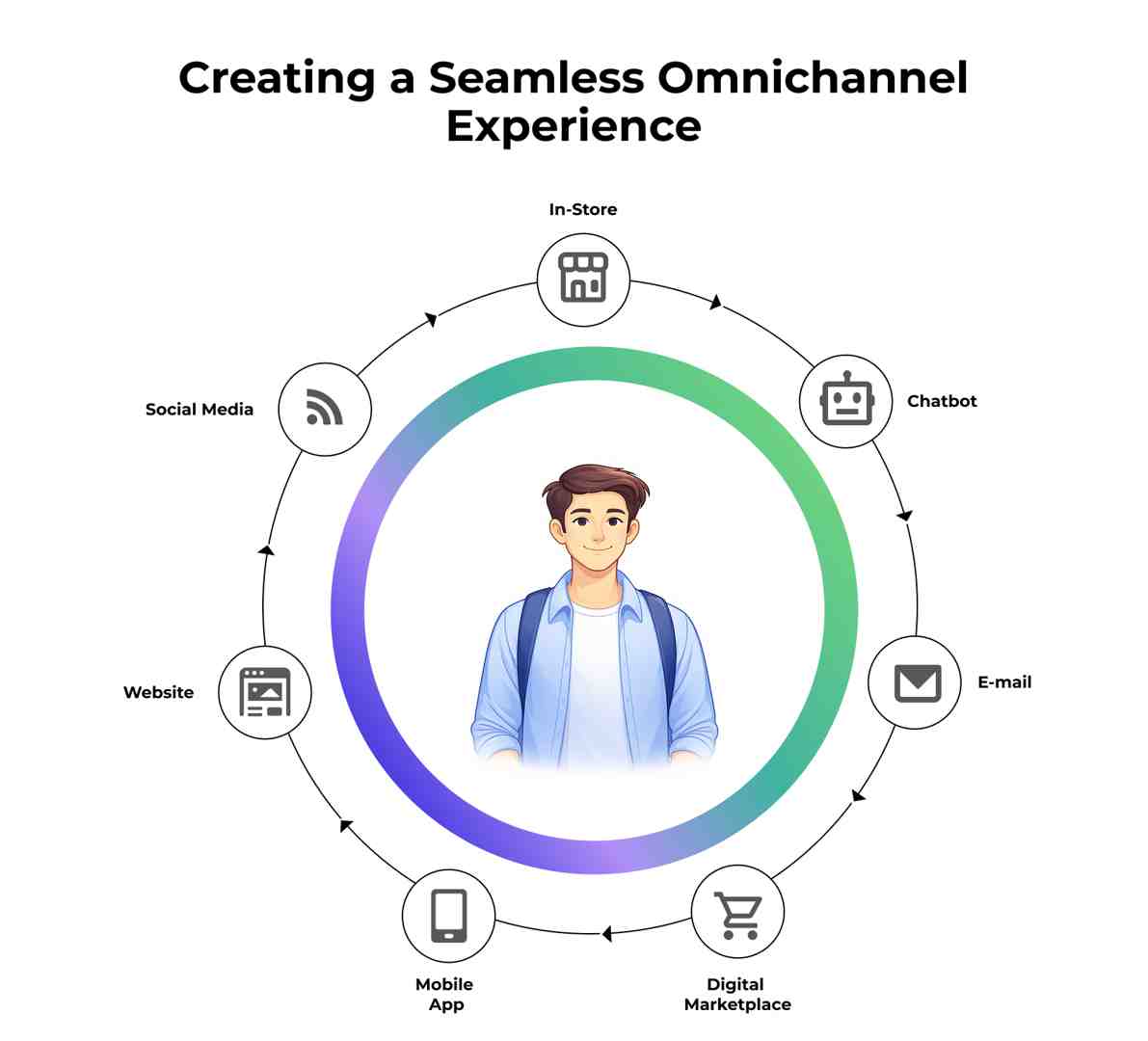
Today’s customers are digital nomads, bouncing between channels, devices, and touchpoints in a matter of minutes. They might start researching on their laptop, switch to their phone on the commute, and then visit a physical store. For us, this means that a cohesive, omnichannel experience isn’t just nice-to-have; it’s essential.
A seamless omnichannel experience means consistency in our branding, messaging, and service across all channels. This requires integrated systems and synchronized data so that every interaction builds upon the last, no matter where it occurs. For instance, a customer should be able to start a conversation with our support team on social media and pick it up on the phone without having to repeat their entire story. Brands like Nike have been lauded for their omnichannel experiences, tailoring in-store inventory and events to local loyalty members and encouraging in-store app usage for improved product information. We need to ensure that our online and offline interactions are always in sync.
The Role of Personalization in Customer Journey Optimization
Imagine walking into your favorite coffee shop, and before you even reach the counter, the barista greets you with your go-to order. That feeling of being understood and valued is what personalization delivers online. It’s about tailoring experiences—content, product recommendations, messages—to individual customer preferences, behaviors, and needs.
The impact of personalization is significant: companies that excel at personalization generate 40% more revenue from those efforts than average players. This isn’t just about using their first name in an email; it’s about dynamic experiences that adapt in real-time. Think of how platforms like YouTube recommend over 70% of the videos people watch, keeping users engaged by serving up content specifically for them. We must use our customer data responsibly to drive this level of personalization, making each customer feel seen and valued.
Leverage Customer Feedback for Continuous Improvement
We might think we know what our customers want, but often, the best insights come directly from them. Actively leveraging customer feedback is non-negotiable for continuous customer journey optimization.
This means implementing mechanisms for real-time feedback monitoring. We can use diverse methods, including:
- Surveys: Targeted surveys at key points in the journey (e.g., post-purchase, after a support interaction).
- Social Media Monitoring: Listening to what customers are saying about us online.
- User Testing: Observing how real users interact with our website or app.
- Net Promoter Score (NPS): A simple but powerful metric to gauge customer loyalty.
- Website Feedback Tools: Small pop-ups or widgets that allow customers to share thoughts on specific pages.
Gathering this feedback is just the first step. The real magic happens when we analyze it, identify patterns, and use those insights to make targeted improvements. By closing the feedback loop, we not only fix issues but also show our customers that their voices matter.
Measuring Success and Leveraging Technology
We’ve explored what customer journey optimization is and how to approach it strategically. But how do we know if our efforts are actually paying off? And what role does technology play in making all of this possible?
How to Measure the ROI of Customer Journey Optimization
Measuring the Return on Investment (ROI) of customer journey optimization is crucial for demonstrating its value and securing continued resources. We look beyond just immediate sales to a broader set of metrics that reflect long-term customer relationships and business health:
- Conversion Rate: The percentage of visitors who complete a desired action (e.g., purchase, sign-up).
- Customer Lifetime Value (LTV): The total revenue we expect to generate from a customer over their relationship with us. Optimizing the journey should increase LTV.
- Churn Rate: The percentage of customers who stop using our product or service. A well-optimized journey reduces churn.
- Customer Satisfaction (CSAT): Typically measured through surveys, indicating how happy customers are with specific interactions or our overall service.
- Net Promoter Score (NPS): Measures customer loyalty and their willingness to recommend us to others.
- Attribution Modeling: Understanding which touchpoints contribute to conversions across the entire journey, rather than just the last click. This helps us allocate resources effectively.
As mentioned in the intro, implementing customer journey management can significantly boost our marketing ROI by 10%, increase employee engagement by 25%, and drive customer retention by 2%. By tracking these metrics consistently, we can connect our optimization efforts directly to tangible business outcomes.
The Role of Technology and AI
Let’s be honest: manually tracking every customer interaction across every channel would be a nightmare. This is where technology steps in as our trusty sidekick. Tools like Customer Data Platforms (CDPs), analytics platforms, and AI-powered solutions are indispensable for effective customer journey optimization.
- Customer Data Platforms (CDPs): These platforms unify customer data from various sources (web, mobile, CRM, marketing automation, support) into a single, comprehensive profile. This gives us a 360-degree view of each customer, essential for personalization and understanding their journey.
- Analytics Tools: These allow us to track user behavior, measure engagement, identify drop-off points, and perform deep dives into customer segments. Customer journey analytics specifically focuses on understanding how customers move through touchpoints and how these interactions affect outcomes.
- AI and Machine Learning: This is where things get really exciting! AI can help us in several ways:
- Predictive Analytics: Forecasting future customer behavior, such as identifying customers at risk of churn, allowing for proactive interventions.
- Reinforcement Learning: Unlike traditional AI that learns from historical data, reinforcement learning learns from experience through trial and error. It can dynamically adapt and recommend the “next best action” for a customer in real-time, optimizing for a defined goal. This means our systems can balance exploring new sequences of content delivery with presenting customers with currently known best sequences.
- Personalization at Scale: AI can analyze vast amounts of data to deliver highly personalized experiences, optimizing message content, channel, timing, and frequency for each individual.
By leveraging these technologies, we can move from guesswork to precision, making data-driven decisions that continuously improve the customer experience and drive conversions.
Frequently Asked Questions about Customer Journey Optimization
We often encounter common questions about this powerful approach. Let’s clarify some of the most frequently asked ones.
What is the difference between customer journey mapping, management, and optimization?
These terms are often used interchangeably, but they represent distinct, albeit interconnected, concepts:
- Customer Journey Mapping: This is the visualization process. It’s about creating a diagram or storyboard that illustrates a customer’s path, including their actions, thoughts, feelings, and touchpoints at each stage. It helps us understand the current state.
- Customer Journey Management: This is the ongoing process of overseeing and orchestrating the customer journey. It involves setting up the processes, resources, and governance structures to ensure a consistent and positive experience across all touchpoints. It’s about maintaining the journey.
- Customer Journey Optimization: This is the active process of using data and insights to make targeted improvements to the mapped journey and the underlying management processes. It’s about identifying pain points, testing solutions, and refining the experience to achieve specific business goals, like increased conversions or retention. It’s about actively improving the journey.
Think of it this way: you map the route, you manage the traffic, and you optimize the road itself to make the drive smoother and faster.
How often should a customer journey map be updated?
A customer journey map is not a “set it and forget it” artifact. The customer landscape, our products, and market conditions are constantly evolving. Therefore, we recommend reviewing and updating our customer journey maps regularly.
A good cadence would be quarterly or semi-annually for a comprehensive review. Additionally, we should update the map whenever there are significant changes, such as:
- Launching a new product or service
- Entering a new market segment
- Major changes in our marketing or sales strategies
- Significant shifts in customer behavior or expectations
- Accumulation of new, critical customer feedback insights
Treating our customer journey map as a living document ensures it remains relevant and effective for our customer journey optimization efforts.
What is the single most important factor in customer journey optimization?
While data, technology, and process are all critical, the single most important factor in customer journey optimization is understanding the customer’s perspective and emotions. It’s about empathy.
Why? Because, as Deloitte points out, 95 percent of all purchasing decisions are driven by emotion. If we don’t understand what our customers are feeling—their frustrations, their desires, their anxieties—at each touchpoint, we’ll miss the true pain points and the moments that matter most. We can collect all the data in the world, but without the empathetic lens, we might optimize for efficiency while inadvertently creating a cold or impersonal experience. Putting ourselves in their shoes allows us to design experiences that genuinely resonate, build trust, and foster loyalty.
Conclusion: Put Your Customer at the Center of Your Growth Strategy
In today’s competitive landscape, customer journey optimization is no longer a luxury; it’s a fundamental requirement for sustainable growth. It’s about adopting a journey-centric mindset that permeates every aspect of our business, ensuring that every interaction is designed with the customer’s needs and emotions in mind.
By carefully mapping, managing, and optimizing the customer journey, we don’t just fix problems; we open up immense opportunities. We create seamless experiences that reduce friction, build trust, and ultimately drive higher conversion rates and greater customer lifetime value. This continuous improvement creates a powerful competitive advantage, leading to increased profitability and a loyal customer base that champions our brand.
At SiteTuners, we specialize in helping businesses like yours identify and fix website conversion barriers, changing your customer journeys into pathways of success. Our proven methodologies, backed by over two decades of delivering measurable results for clients across the United States, Canada, Europe, Asia Pacific, and Latin America, ensure that your optimization efforts translate into tangible business growth.
Ready to put your customer at the center of your growth strategy and see a significant impact on your bottom line?
Get expert help with your conversion rate optimization strategy